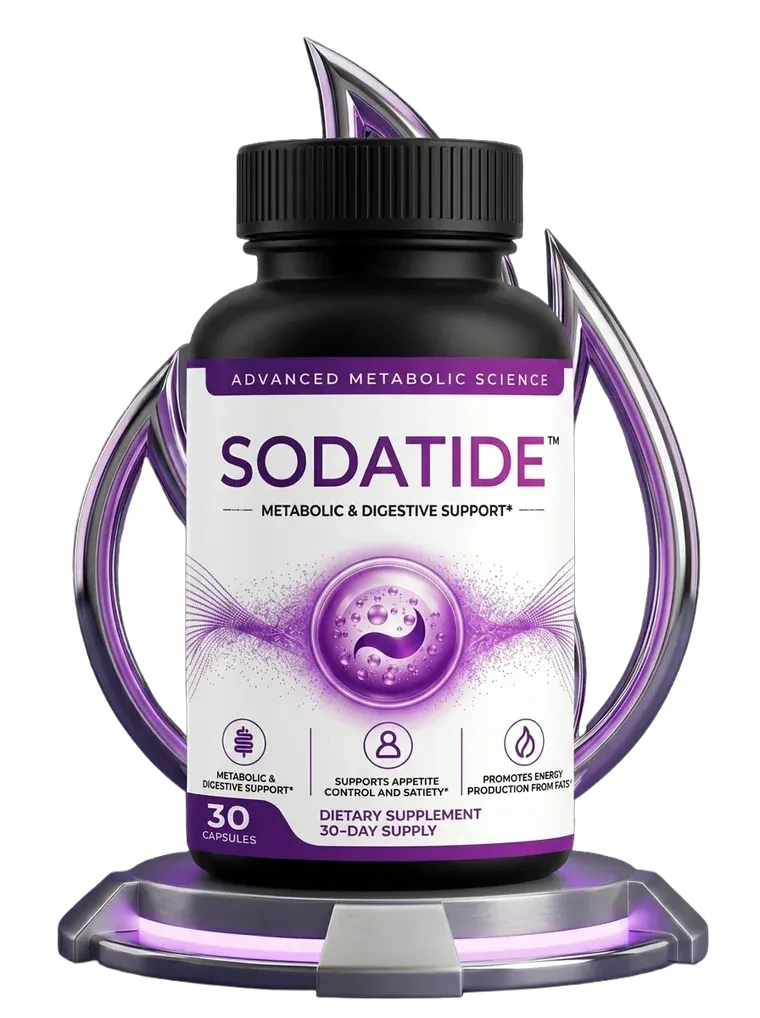
Sodatide Guides: Gut Health and Supplement Buying Guides
The Sodatide guides are free, plain-English reads on gut health and supplement buying. Start with the gut health guide, then use the seven-step buyer's checklist. Three short blog posts cover inulin vs. resistant starch, Akkermansia and probiotic labels. A glossary defines CFU, butyrate, synbiotic and other common terms.
Sodatide guides and blog posts in one place
This hub collects every Sodatide guide and blog post on gut health and supplement buying. There are two long guides and three shorter posts.
Each one is written in plain English and links to its sources. Pick a card to start reading.

Gut Health Guide: Fiber, Probiotics and Your Metabolism
The starting point. How gut bacteria turn fiber into useful compounds, and where supplements fit.
Choosing a Gut Health Supplement: A Buyer's Checklist
Seven checks to run on any label before you pay, applied honestly to one product.
Inulin vs. Resistant Starch
Two prebiotic fibers compared: where each comes from and what each feeds.
What Is Akkermansia?
A gut bacterium that lives in the mucus layer, and what one human trial found.
How to Read a Probiotic Label
CFU, species and strain codes explained, so you can compare any two bottles.
What the Sodatide gut health guide teaches
The gut health guide explains how fiber, gut bacteria and metabolism connect. It is the right first read if the terms feel new.
It starts with the colon, where most gut bacteria live. It shows how they ferment fiber into short-chain fatty acids such as butyrate. Then it looks at what human studies found for inulin, resistant starch and probiotics.
- How one large trial saw butyrate rise on potato starch, and why more than a third of people saw no rise (Baxter et al., 2019).
- What a chicory inulin trial found for bowel habits (Micka et al., 2017).
- Which everyday foods carry inulin and resistant starch.
- Where Sodatide fits, and the limits of a small daily dose.
What the gut health supplement buying checklist teaches
The buyer’s checklist gives you seven questions to ask of any gut health product. It turns a confusing label into a simple pass or fail.
It covers the CFU count, strain names, fiber grams, storage, the guarantee, seller contact and GLP-1 hype. Then it scores Sodatide against the same list. Sodatide passes some checks and fails others, and the guide says which.
What the Sodatide blog posts teach
The three blog posts each take one narrow topic and explain it in a short read. They suit a coffee break more than a study session.
Inulin vs. resistant starch
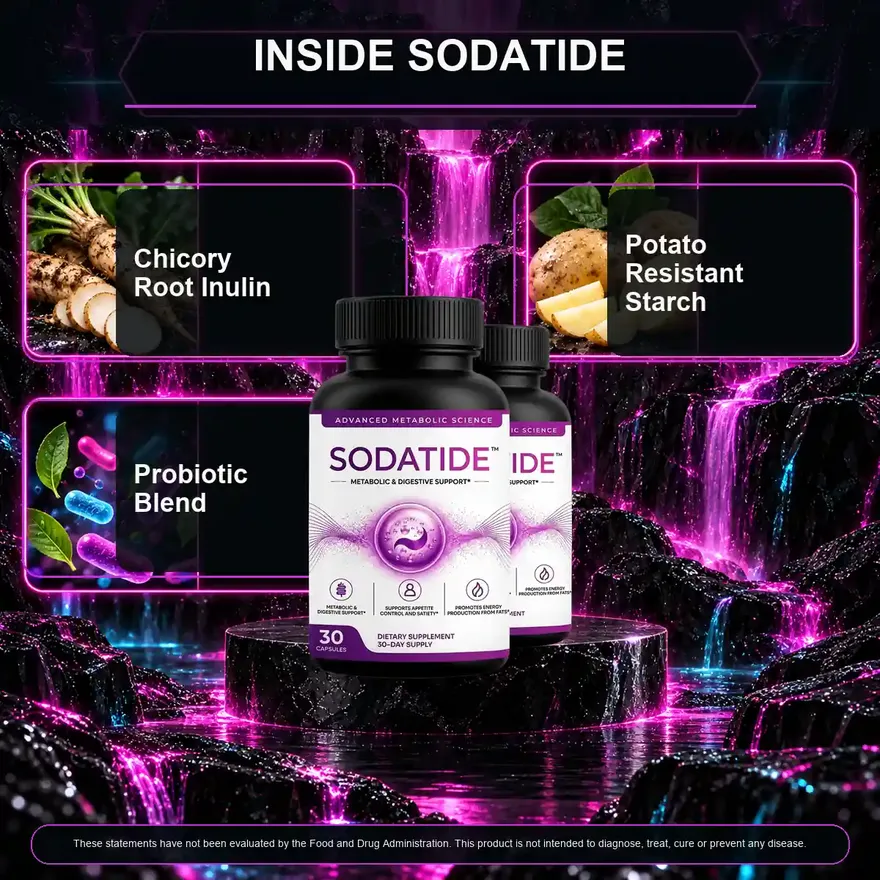
Both are prebiotic fibers, and Sodatide contains both. The inulin vs. resistant starch post compares where each comes from, how gut bacteria use them and what doses the research used.
What is Akkermansia?
Akkermansia muciniphila is one of the three probiotic species on the Sodatide label. The Akkermansia post explains what it is and what one small human trial found (Depommier et al., 2019).
How to read a probiotic label
Probiotic labels use terms like CFU and strain codes. The probiotic label post decodes each line, so you can compare two bottles side by side.
Gut health glossary: terms used across the guides
These are the words that come up again and again in the guides. Each definition is short and uses everyday language.
| Term | What it means |
|---|---|
| Prebiotic | A fiber or other food part that feeds helpful gut bacteria. Your own body does not digest it. |
| Probiotic | Live bacteria or yeasts that may offer a health benefit when taken in enough amount. |
| Synbiotic | A product that combines a prebiotic with a probiotic in one dose. |
| CFU | Colony-forming units. The count of live, active microbes in a probiotic dose. |
| Short-chain fatty acid | A small compound made when gut bacteria ferment fiber. Acetate, propionate and butyrate are the main ones. |
| Butyrate | A short-chain fatty acid that feeds the cells lining the colon. |
| Resistant starch | Starch that resists digestion in the small intestine and is fermented in the colon. |
| Inulin | A soluble fiber found in chicory root, onions, garlic and other plants. |
| Strain | A specific type within a bacterial species, often shown by a code after the name. |
Probiotic effects depend on the exact strain, and typical products carry 1 to 10 billion CFU per dose (NIH ODS, 2025).
How to read the Sodatide guides in order
Read the guides in this order if you are new to the topic. Each step builds on the last one.
Learn the basics
Read the gut health guide to understand fiber, bacteria and short-chain fatty acids.
Learn the label terms
Read the probiotic label post, so CFU and strain codes make sense.
Compare the two fibers
Read the inulin vs. resistant starch post to see how the two differ.
Run the checklist
Use the buyer's checklist on any product you are thinking about.
Common gut health myths the Sodatide guides clear up
Supplement ads repeat a few ideas that do not hold up. The guides take each one apart with the research behind it.
“More CFU is always better.”
Not quite. Effects depend on the strain, and many products carry 1 to 10 billion CFU (NIH ODS, 2025). A bigger count of the wrong strain adds little.
“All fiber does the same job.”
Different fibers feed different bacteria. Even with one fiber, people respond in different ways (Baxter et al., 2019).
“A capsule can replace fiber-rich food.”
A capsule holds milligrams. Studies used grams, which is the amount found in a few servings of plants.
“Fiber works like a GLP-1 shot.”
Fiber raised the body's own GLP-1 in a small trial at 16 grams a day (Cani et al., 2009). That is not the same as a prescription drug.
“The FDA approved this supplement.”
The FDA does not approve supplements before sale (FDA, 2022). A claim like that is a red flag.
“Results show up in days.”
Fiber and probiotic trials ran for weeks or months. Nobody can promise a timeline.
Who the Sodatide guides are written for
The guides are written for adults who want to understand gut health before they spend money. No science background is needed.
They suit three kinds of readers. Some are curious about fiber and probiotics in general. Some are comparing two or three products. Others already own a bottle and want to know what is inside it.
Every guide keeps sentences short and defines each term the first time it appears. If a word still feels unclear, the glossary above has it.
How the Sodatide guides choose and check their sources
The guides only cite sources the team has opened and read. Most are human trials in peer-reviewed journals, plus public pages from the FDA and the NIH.
Each citation links straight to the paper or public page. When a study was paid for by an ingredient maker, the guides say so. When results were mixed, the guides say that too.
- Human studies come before animal or lab studies.
- The dose, length and number of people are given for each trial.
- No study is described as testing a product it did not test.
- Missing facts, like a CFU count, are marked as not published.
Found an error? Email the website inbox and the guide will be checked and dated again.
What the Sodatide guides do not cover
The guides explain general research. They do not diagnose, and they do not tell you what to take for a health problem.
They also do not promise results from Sodatide or any other product. No published study has tested Sodatide itself, and the guides say so plainly.
- Personal medical advice or treatment plans.
- Weight-loss promises or timelines.
- Comparisons with prescription drugs, including GLP-1 medicines.
- Brand rankings or “top 10” lists.
Where to go after the Sodatide guides
Once you know the terms, the product pages are easier to judge. The Sodatide ingredients page lists every amount on the label. The FAQ answers 35 short questions about dose, price and refunds.
If you decide to try it, the pricing page compares the three pack sizes. Prices are printed at checkout, and every order has a 60-day money-back window.
Sodatide guides: common questions
Are the Sodatide guides free to read?
Yes. Every guide and blog post on this site is free, with no sign-up and no email wall.
Do the Sodatide guides give medical advice?
No. They explain general research in plain words. Your doctor is the right person for advice about your own health.
Which Sodatide guide should I read first?
Start with the gut health guide. It explains the basic terms that the other pieces build on.
Do the guides say Sodatide works?
The guides describe research on the ingredient types, not on Sodatide itself. They also point out that the fiber doses in Sodatide are far below the doses in those studies.
How often are the guides updated?
Each guide shows a “Last updated” date. The current round of checks was finished on September 30, 2026.
Where do the guides get their research?
Every study is linked to its journal or public source, and each one was opened and read. The guides never cite a study that the team has not checked.