What Is Akkermansia Muciniphila? What the Research Says
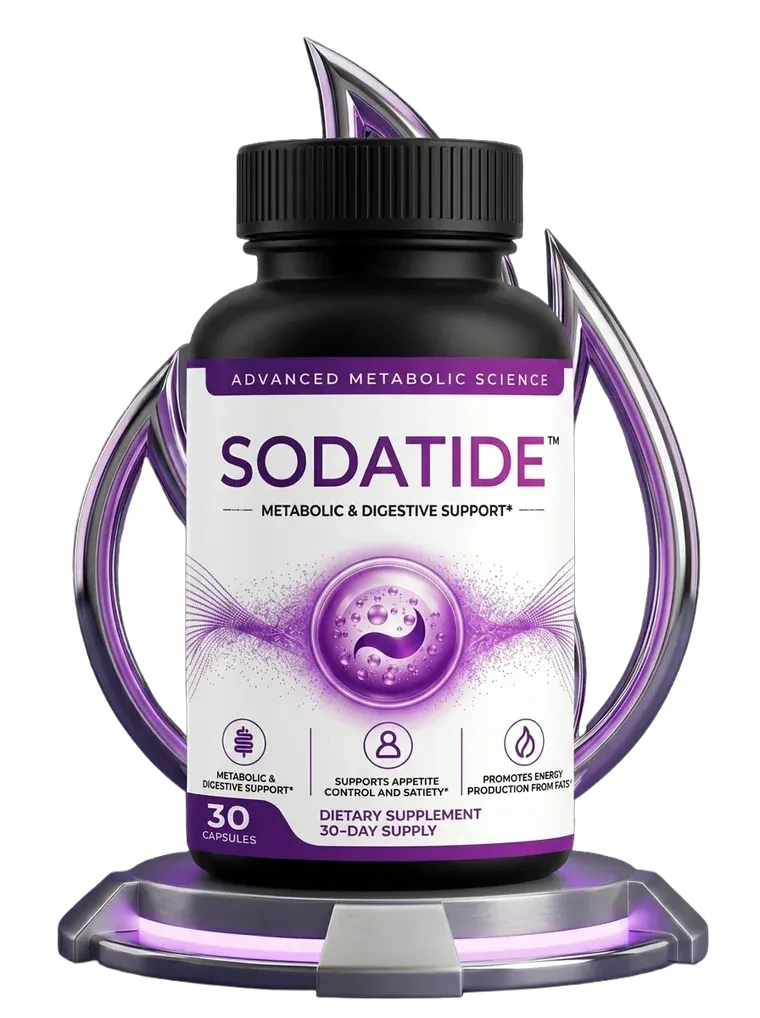
Akkermansia muciniphila is a gut bacterium that lives in the mucus lining of the intestine. In a small 3-month trial, 10 billion cells a day of the pasteurized form improved insulin sensitivity, but weight change was not significant. Sodatide lists Akkermansia in its 36 mg blend without a CFU count, so its dose is not published.
What is Akkermansia muciniphila?
Akkermansia muciniphila is a gut bacterium that lives in the mucus lining of your intestine. Its name means “mucus-loving,” because mucus is its main food.
Most healthy adults carry some of it. How much you have differs widely between people. It has become one of the most talked-about gut bacteria in metabolic research.
Quick facts
- Type: a single-celled gut bacterium
- Home: the mucus layer of the gut wall
- Food: mucin, the protein in gut mucus
- Oxygen: it cannot survive long in air
Where does Akkermansia live, and what does it eat?
Akkermansia lives right on the mucus layer that covers the gut wall. It eats the mucin in that layer, and your gut makes fresh mucus in return.
That steady cycle may help keep the mucus layer renewed. Scientists think this is one reason the bacterium could matter for the gut barrier. That idea comes mostly from lab work and is not proven in people.
Why it is hard to put in a capsule
Akkermansia dies when it meets oxygen. That makes the live form hard to grow, dry and store. It is one reason researchers also tested a heat-treated, pasteurized form.
Live vs. pasteurized Akkermansia: what is the difference?
Live Akkermansia is made of living cells that must survive drying, storage and the trip through your stomach. Pasteurized Akkermansia is heat-treated, so the cells are no longer alive but their parts remain.
| Feature | Live Akkermansia | Pasteurized Akkermansia |
|---|---|---|
| Cells alive? | Yes, if stored well | No |
| Counts as a probiotic? | Yes | Not strictly, since probiotics are live |
| Storage | Fragile; cold and dry helps | More stable |
| Result in the 2019 trial | Less clear results | Improved insulin sensitivity |
In the Depommier trial, the clearer result came from the pasteurized form (Depommier et al., 2019). The Sodatide label does not say which form it uses. The seller asks you to refrigerate after opening to protect the probiotics, which points to live cultures.
Why do researchers study Akkermansia for metabolic health?
Researchers study Akkermansia because people with better blood sugar control often carry more of it. That link was first seen in lab and animal work, and it pushed scientists to test it in humans.
A marker, not a cause
Having more Akkermansia may go along with good metabolic health. That does not prove the bacterium causes it.
The gut barrier idea
The mucus link suggests it may help the gut lining. Human proof for this is still thin.
Few human trials
Only a handful of small human studies exist. Most ran for 3 months or less.
The fair summary is that Akkermansia is promising but unproven. Treat bold headlines about it as early news, not settled fact. A good story in mice often shrinks once it is tested in people.
What do human trials on Akkermansia show?
Human trials show small, early signals, mostly on blood sugar. None found a clear effect on body weight.
| Study | What was tested | Main result |
|---|---|---|
| Depommier 2019 (Depommier et al., 2019) | 10 billion Akkermansia cells a day, 3 months, 32 adults with overweight or obesity | The pasteurized form improved insulin sensitivity. Weight change was not significant. |
| Perraudeau 2020 (Perraudeau et al., 2020) | A 5-strain formula with Akkermansia plus inulin, 6 capsules a day, 12 weeks, 76 adults with type 2 diabetes | After-meal glucose improved, but only at the edge of significance (p=0.05). HbA1c did not change significantly. The authors worked for the maker. |
| Bush 2023 (Bush et al., 2023) | 3.5 or 7 g a day of potato resistant starch, 4 weeks, 75 adults | At 3.5 g, the body's own Akkermansia and Bifidobacterium rose. The starch maker funded it. |
These trials are small and short. The strongest-sounding results came from studies run or funded by companies with a product to sell.
That does not make the results false. It does mean larger, independent trials are needed before anyone can promise a benefit.
How much Akkermansia is in Sodatide?
Sodatide lists Akkermansia muciniphila as one of three strains in a 36 mg probiotic blend. The label does not print a CFU count, so the actual amount of Akkermansia is not published.
| Detail | Depommier 2019 trial | Sodatide label |
|---|---|---|
| Daily amount | 10 billion cells | Not published (part of a 36 mg blend) |
| Form | Live and pasteurized, tested apart | Not stated |
| Other strains | None | B. infantis and C. butyricum |
| Strain ID | Named in the study | Not given |
| Tested as a product | Yes | No |
Milligrams tell you the weight of the powder, not how many cells are alive. Without a CFU count, you cannot compare Sodatide with the trial dose. You can see all three strains on the Sodatide ingredients page.
Read the Sodatide label for yourself
Three strains, two fibers and every weight in milligrams. The CFU count is the one number the label leaves out.
Does Akkermansia cause weight loss?
No human trial has shown that Akkermansia causes weight loss. In the Depommier trial, body weight did not change in a significant way (Depommier et al., 2019).
Many ads link Akkermansia to a slimmer waist. That claim runs ahead of the science. The trials measured blood sugar markers first, and weight was a side result.
Can you raise your own Akkermansia with food?
Some fibers may raise the Akkermansia you already carry. In one trial, 3.5 grams a day of potato resistant starch raised both Akkermansia and Bifidobacterium within 4 weeks (Bush et al., 2023).
- Eat a range of fibers from vegetables, beans, oats and fruit.
- Try cooked and cooled potatoes or rice for resistant starch.
- Add onions, leeks and garlic for inulin.
- Raise fiber slowly and drink more water.
This is a food-first route, and it costs little. Our post on inulin vs. resistant starch explains how the two fibers differ.
Is Akkermansia safe, and what should you check before you buy?
Akkermansia has only been tested in a few small, short human trials. Long-term safety data in large groups does not exist yet.
The full list of Sodatide cautions is on the side effects page.
A quick buyer checklist
- Look for a CFU count. Typical probiotic products carry 1 to 10 billion CFU (NIH ODS, 2025).
- Look for a strain ID after the species name.
- Check if the Akkermansia is live or pasteurized.
- Check the storage advice, since live Akkermansia is fragile.
Effects depend on the exact strain, not just the species (NIH ODS, 2025). For a step-by-step method, read how to read a probiotic supplement label.
Akkermansia: common questions
What does Akkermansia muciniphila do?
It lives in the mucus layer that lines the gut and feeds on that mucus. Researchers study it because it seems linked to how the body handles blood sugar, but human trials are still few and small.
Does Akkermansia help you lose weight?
Not in the evidence so far. In the main human trial, 3 months of Akkermansia did not change body weight in a significant way.
What is pasteurized Akkermansia?
It is Akkermansia that has been heat-treated so the cells are no longer alive. In one small trial, the pasteurized form gave the clearer result on insulin sensitivity.
How much Akkermansia is in Sodatide?
The label lists Akkermansia as one of three strains in a 36 mg probiotic blend. It does not give a CFU count, so the amount of Akkermansia is not published.
Can food raise Akkermansia?
Some fibers may. In one trial, 3.5 grams a day of potato resistant starch raised Akkermansia and Bifidobacterium over 4 weeks.
Is Akkermansia safe?
Only a few small, short human trials exist, so long-term data is limited. People with a weak immune system should ask a doctor before taking any live probiotic.