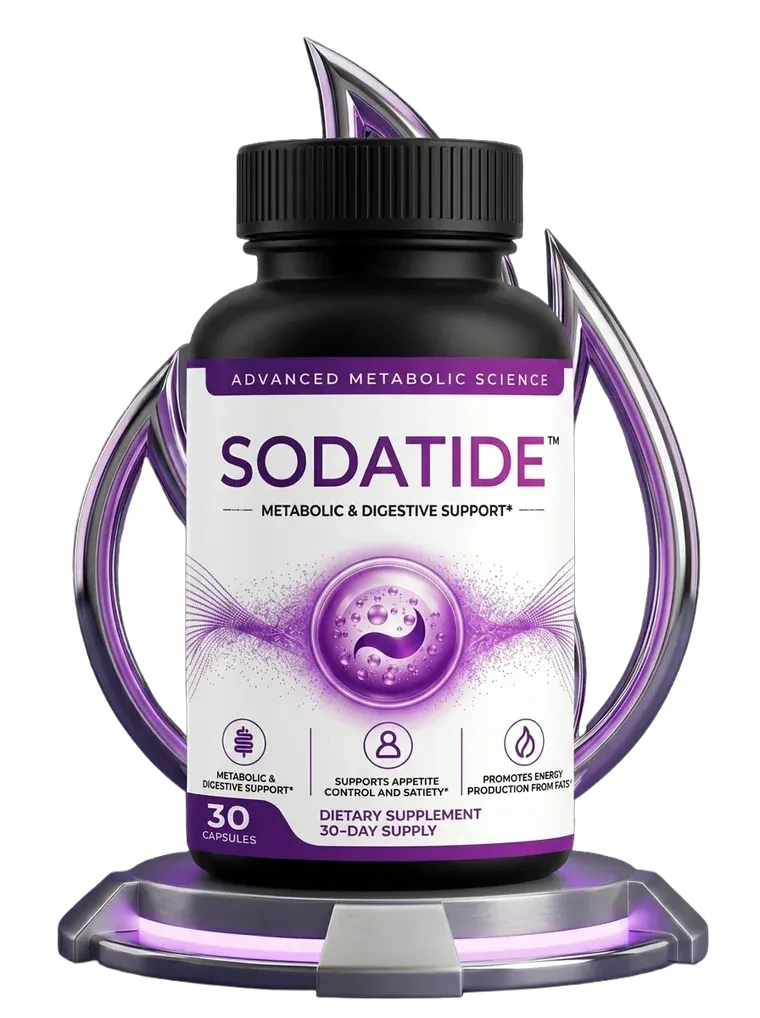
Sodatide Ingredients: Fibers, Probiotics and Doses
Each Sodatide capsule holds two fibers and a probiotic blend in a vegetarian shell.
That is 211 mg chicory root inulin, 100 mg potato resistant starch and a 36 mg blend of B. infantis, C. butyricum and A. muciniphila. No CFU count is published.
Read the Supplement Facts label line by line.
What is inside one Sodatide capsule?
One Sodatide capsule holds three active ingredients and four helper ingredients. The actives are two prebiotic fibers and one blend of three probiotic strains. Their combined weight is 347 mg.
Prebiotics are fibers your own gut cannot digest. Bacteria in the colon eat them instead. Probiotics are the bacteria themselves. A product with both is often called a synbiotic.
| Ingredient | Amount | Type | Main job |
|---|---|---|---|
| Chicory Root Inulin | 211 mg | Prebiotic fiber | Feeds Bifidobacteria in the colon |
| Potato Resistant Starch | 100 mg | Prebiotic starch | Ferments into butyrate in the colon |
| Probiotic Blend | 36 mg | Probiotic blend (3 strains) | Adds three named bacteria |
| Other ingredients | Not listed by weight | Capsule and fillers | Hold and move the powder |
The full printed panel is on the supplement facts page.
Chicory root inulin in Sodatide: the main prebiotic fiber

Chicory root inulin is the largest ingredient in Sodatide, at 211 mg per capsule. It is a soluble fiber made of chains of fructose sugar. Your small intestine cannot break those chains. So the inulin passes through to the colon, where bacteria ferment it.
Bifidobacteria are among the bacteria that feed on inulin. That is why inulin is one of the most studied prebiotics.
What the research on inulin found
- In people with constipation, 12 g of chicory inulin a day raised stools from 3.0 to 4.0 a week (Micka et al., 2017).
- In a small trial, 16 g a day of a related fiber lowered hunger and raised fullness hormones (Cani et al., 2009).
- At 21 g a day for 12 weeks, people ate less and lost about 1 kg (Parnell and Reimer, 2009).
- Gas and bloating were the main complaints at 5 to 10 g a day (Bonnema et al., 2010).
Potato resistant starch in Sodatide: fuel for the colon
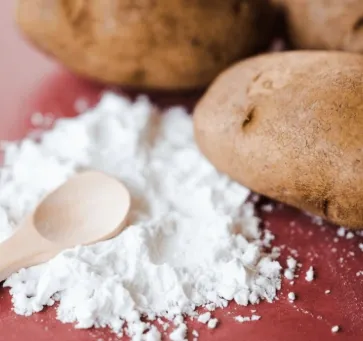
Potato resistant starch is the second fiber in Sodatide, at 100 mg per capsule. Normal starch breaks down into sugar in the small intestine. Resistant starch does not. It reaches the colon mostly intact.
Colon bacteria ferment it into short-chain fatty acids, mainly butyrate. Butyrate is a main fuel for the cells lining the colon.
What the research on resistant starch found
- At 28 to 34 g a day, potato starch raised butyrate by 29% on average. Still, 37% of people showed no rise (Baxter et al., 2019).
- At 3.5 g a day for 4 weeks, Bifidobacterium and Akkermansia counts rose (Bush et al., 2023).
- At 30 g a day, insulin sensitivity improved, but weight did not change (Robertson et al., 2005).
- A single high dose made people eat less later, though hunger ratings stayed the same (Bodinham et al., 2010).
The Sodatide probiotic blend: three strains in 36 mg
The Sodatide probiotic blend weighs 36 mg and names three bacteria. The label lists them by species only. It gives no strain codes and no CFU count, which is the number of live cells.
Bifidobacterium infantis
This species belongs to the Bifidobacterium group, which is common in the human gut. It is one of the bacteria that ferment inulin. Pairing it with inulin is the classic synbiotic idea: add the bacteria and its food together.
Clostridium butyricum
The name comes from butyrate, the fatty acid it makes. It forms spores, which helps it survive storage and stomach acid. One widely sold strain lacked major toxin genes in lab and rodent tests (Isa et al., 2016). Sodatide does not say which strain it uses.
Akkermansia muciniphila
Akkermansia lives in the mucus layer of the gut lining. In a 3-month trial, a pasteurized form at 10 billion cells a day improved insulin sensitivity (Depommier et al., 2019). Weight change was not significant. The Sodatide label does not say if its Akkermansia is live or pasteurized.
Want the background on this strain? Read what Akkermansia is.
Sodatide dose next to the research doses, in one table
The Sodatide amounts are much smaller than the amounts used in human studies. The fibers sit 35 to 340 times below the research range. The probiotic blend cannot be compared at all without a CFU count.
Research used 57x to 100x more. Sources: (Micka et al., 2017) (Cani et al., 2009) (Parnell and Reimer, 2009)
Research used 35x to 340x more. Sources: (Bush et al., 2023) (Baxter et al., 2019)
Research used cannot compare without a CFU count. Sources: (Depommier et al., 2019) (NIH ODS, 2025)
Sodatide per capsule dose range used in human studies (log scale)
| Ingredient | Sodatide per capsule | Research dose per day | How far apart |
|---|---|---|---|
| Chicory root inulin | 211 mg | 12 to 21 g | About 57x to 100x |
| Potato resistant starch | 100 mg | 3.5 to 34 g | About 35x to 340x |
| Probiotic blend | 36 mg (CFU not published) | 10 billion cells (Akkermansia) | Unknown |
| All three together | 347 mg | Several grams at the least | Large |
Typical probiotic products carry 1 to 10 billion CFU, and effects depend on the strain (NIH ODS, 2025). Without that number on the label, nobody can judge the blend by weight.
What are the other ingredients in Sodatide?
The other ingredients in Sodatide are the capsule shell and three fillers. None of them is an active nutrient. They exist so the machine can fill each capsule evenly and the powder stays dry.
| Other ingredient | What it is | Why it is there |
|---|---|---|
| Hypromellose | A plant-based cellulose | Forms the vegetarian capsule shell |
| Microcrystalline cellulose | Refined plant fiber | Adds bulk so each capsule fills to the same size |
| Magnesium stearate | A magnesium salt of a fatty acid | Stops powder sticking to the machine |
| Silica | A fine mineral powder | Keeps the powder from clumping in humid air |
All four are common in capsule supplements. The label lists them in one line under the panel, with no amounts. That is normal for other ingredients.
What is not in Sodatide?
Sodatide has a short label, so what is missing is easy to see. Nothing on the panel is a stimulant, a sweetener or a drug.
- No caffeine or green tea extract on the label
- No added sugar or sweetener listed
- No gelatin: the shell is hypromellose
- No GLP-1 drug or any other medicine
- No proprietary blend hiding the fiber amounts
The one blend on the label is the probiotic mix. Its total weight is printed, but the split between the three strains is not.
How do the Sodatide ingredients work together?
The Sodatide ingredients are chosen to work as a team in the gut. The two fibers feed bacteria, and the blend adds bacteria. Here is the order of events the formula relies on.
The capsule opens
The hypromellose shell breaks down in the stomach and releases the powder.
The fibers pass through
Inulin and resistant starch are not digested in the small intestine. They move on to the colon.
Bacteria ferment the fibers
Bifidobacteria and other gut bacteria feed on them and make short-chain fatty acids.
The strains join in
The three probiotic strains are added to the bacteria already living in your gut.
Two fibers are used instead of one because they feed slightly different bacteria. The inulin vs resistant starch guide explains the difference. The research behind each step is on the how it works page.
How to check Sodatide ingredients yourself
You can check the Sodatide ingredients against this page in a few minutes. All you need is the bottle in your hand.
Read the panel
Match the three amounts: 211 mg, 100 mg and 36 mg. They should be the same as the table above.
Look for a CFU line
If a future label adds a CFU count, it will sit next to the probiotic blend.
Ask the order desk
Call the order desk with questions about the strains or the batch.
Lot details are on the batch verify page, and side effects are covered on the side effects page.
Sodatide ingredients: common questions
How many active ingredients are in Sodatide?
Sodatide has three active ingredients: 211 mg chicory root inulin, 100 mg potato resistant starch and a 36 mg probiotic blend. Together they weigh 347 mg per capsule.
Which probiotic strains does Sodatide contain?
Three organisms are named in the blend: Bifidobacterium infantis, Clostridium butyricum and Akkermansia muciniphila. The label does not give strain codes or a CFU count.
Is the fiber dose in Sodatide the same as in studies?
No. Studies used 3.5 to 34 grams of fiber a day. One capsule gives about a third of a gram in total, so the gap is large.
Does Sodatide contain caffeine or stimulants?
No stimulant appears on the label. The only other ingredients are the capsule shell and three standard fillers.
Is the Sodatide capsule vegetarian?
Yes. The shell is hypromellose, a plant-based cellulose. The label lists no gelatin.
Why is the CFU count missing?
The label gives the probiotic blend in milligrams only. You can ask the order desk, but no CFU figure has been published.