Choosing a Gut Health Supplement: A Buyer's Checklist
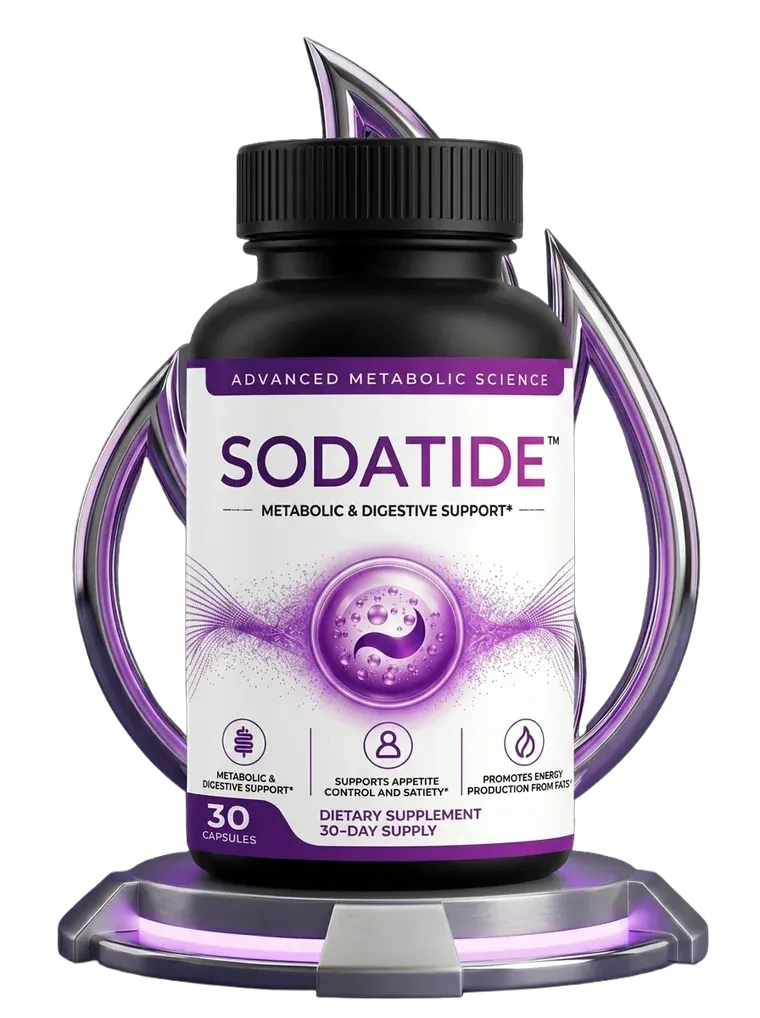
Check seven things before you buy a gut health supplement: a printed CFU count, named strains, fiber grams close to research doses, clear storage rules, a written money-back guarantee, a reachable seller and no GLP-1 hype. Applied to Sodatide, it passes four checks, partly passes one and fails on CFU and fiber grams.
Why use a checklist to choose a gut health supplement?
A checklist turns a crowded shelf into a few simple yes-or-no questions. It helps you judge a product by its label instead of its ad.
Gut health products mix fibers, bacteria and bold claims. Labels vary a lot in how much they tell you. The seven checks below work on any brand, and they take about five minutes.
The gut health supplement buyer's checklist: 7 steps
Run these seven checks in order. Each one takes a minute with the label and the seller's website open.
Look for a CFU count
A probiotic should print its CFU count, the number of live microbes per dose. Without it, you cannot compare the dose with research.
Check that each strain is named
The label should give the genus, species and ideally a strain code. Effects belong to specific strains, not to a whole species.
Compare fiber grams with research
Find the prebiotic fiber amount and compare it with the grams used in human studies. Milligrams and grams are very different.
Read the storage rules
Live probiotics can lose strength with heat and moisture. Check whether the label asks for refrigeration and whether you can manage it.
Confirm the money-back guarantee
Find the refund window, when it starts, who pays return postage and how you ask for a refund.
Make sure the seller is reachable
A real seller lists a phone number, an email and a returns address. Test the phone line before you buy.
Skip GLP-1 hype
No supplement is a GLP-1 drug. Treat any ad that compares a capsule with a weight-loss shot as a warning sign.
You can take this list to any store or product page. Later on this page, the same list is applied to Sodatide, one line at a time.
How to check CFU and strain names on a probiotic label
Look for a number followed by “CFU” and a full name for each bacterium. Both should sit in or near the Supplement Facts panel.
CFU stands for colony-forming units. It counts the live microbes in each dose. Typical products carry 1 to 10 billion CFU, and effects depend on the exact strain (NIH ODS, 2025).
| Label line | What it tells you | Good sign |
|---|---|---|
| Genus | The broad group, such as Bifidobacterium | Always printed |
| Species | The type within that group, such as infantis | Printed for every bacterium |
| Strain code | The exact strain, often letters and numbers | Matches a strain used in studies |
| CFU | How many live microbes per dose | A number, ideally given at expiry |
| Blend weight | Milligrams of powder | Useful, but not a replacement for CFU |
For a deeper walk-through, read the guide to reading a probiotic label.
How to compare prebiotic fiber grams with research doses
Find the fiber amount on the label and compare it with the doses used in human studies. Most fiber research uses grams a day, not milligrams.
Remember that 1 gram equals 1,000 milligrams. A capsule usually holds well under 1 gram in total.
| Fiber | Doses in human studies | What the study found |
|---|---|---|
| Chicory inulin | 12 g a day for 4 weeks (Micka et al., 2017) | Stools rose from 3.0 to 4.0 a week |
| Oligofructose | 16 g a day for 2 weeks (Cani et al., 2009) | Less hunger, more GLP-1 and PYY |
| Potato resistant starch | 3.5 or 7 g a day for 4 weeks (Bush et al., 2023) | Bifidobacterium and Akkermansia rose |
| Potato resistant starch | 28-34 g a day for 2 weeks (Baxter et al., 2019) | Butyrate rose 29% on average |
Two of these studies were paid for by an ingredient maker. They may still be right; it is simply worth knowing.
Storage, guarantee and seller contact: the practical checks
The last practical checks are about living with the product and getting help. A good product can still be a poor buy if you cannot store it or reach the seller.
Storage
If the label says refrigerate, plan a spot in the fridge. A probiotic left warm may lose live bacteria before you finish the bottle.
Guarantee
Note the number of days, when the clock starts and who pays return shipping. Write down the refund steps before you order.
Seller contact
Call the phone number during business hours. A person who can answer label questions is a good sign.
How to spot GLP-1 hype in gut health supplement ads
GLP-1 hype is any ad that suggests a capsule acts like a GLP-1 weight-loss drug. No dietary supplement is a GLP-1 drug.
The grain of truth is small. In one trial, 16 grams a day of prebiotic fiber raised the body's own GLP-1 (Cani et al., 2009). That is a modest natural rise, not a prescription medicine.
- Claims of “nature's GLP-1” or “GLP-1 in a capsule”
- Before-and-after photos with fast weight-loss numbers
- Countdown timers and “last chance” prices
- “FDA approved” on a supplement
- Doctors or reviews with no name, date or source
Real labels are more modest. Supplement claims about body function must carry the FDA disclaimer (FDA, 2024).
Applying the checklist to Sodatide, step by step
Sodatide passes four of the seven checks and fails two. One more is a partial pass. Here is each result, taken from the label and the seller's terms.
| Check | What Sodatide shows | Result |
|---|---|---|
| CFU count listed | Not published. The blend is given as 36 mg only. | Fail |
| Strains named | Three species named: B. infantis, C. butyricum, A. muciniphila. No strain codes. | Partial |
| Fiber grams vs research | 211 mg inulin and 100 mg resistant starch, against 3.5 to 34 grams in studies. | Fail |
| Storage rules | Clear: refrigerate after opening, keep from heat, light and humidity. | Pass |
| Guarantee | 60 days from purchase. Buyer pays return shipping. | Pass |
| Seller contact | A phone line, two email inboxes, office and returns addresses. | Pass |
| No GLP-1 hype | The label makes three modest claims and no GLP-1 claim. | Pass |
The weak points are about dose. The fiber amounts are small, and the probiotic dose cannot be judged without a CFU count. No published study has tested Sodatide itself.
The strong points are about buying. The label is clear, the storage rule is plain and the seller is easy to reach. See every amount on the Sodatide ingredients page.
Questions to ask any seller, including Sodatide, before you buy
A short phone call can settle most label gaps. Ask these questions and write down the answers.
- What is the CFU count per capsule, and is it measured at the time of making or at expiry?
- What are the strain codes for each bacterium?
- Is there an independent lab report for the batch I will get?
- When does the refund window start, and who pays return shipping?
- What happens if the bottle arrives warm or damaged?
For Sodatide, the order desk's number is in the site footer, Mon-Fri 9:00am-5:00pm ET. Note that the lot number SOD-26/SO-3444 and CoA SOD-3444-26-SO shown for Sodatide are draft labels, not lab proof.
Which type of gut health supplement suits which goal?
Match the product type to what you want. A fiber goal and a probiotic goal often point to different products.
| If your goal is | Product type to look at | Trade-off |
|---|---|---|
| More fiber each day | Fiber powder or more fiber-rich food | Must be mixed; may cause gas at first |
| A studied probiotic strain | Single-strain probiotic with a CFU count | No fiber; may cost more per dose |
| One simple daily step | Combined capsule such as Sodatide | Low fiber dose; CFU may be missing |
Whichever you choose, food still does most of the work. The gut health guide lists easy food sources of both fibers.
Before you start any gut health supplement
Check with your doctor first if you take medicine, have a weak immune system, or are pregnant or nursing. Live probiotics carry a rare infection risk in very ill people.
Start with the smallest pack that covers the refund window. That gives you time to judge the product and still get your money back. For Sodatide, the options are on the pricing page.
Choosing a gut health supplement: common questions
What is the most important thing on a probiotic label?
The CFU count and the named strains matter most. Effects depend on the strain, and typical products carry 1 to 10 billion CFU per dose (NIH ODS, 2025).
Is a higher CFU count always better?
No. The right strain at a dose that was studied matters more than the biggest number. A huge count of an untested strain proves little.
Do gut health supplements need to be refrigerated?
Some do and some do not. Follow the label, because it is written for that product's strains and packaging.
Can a supplement be FDA approved?
No. The FDA does not approve dietary supplements before they are sold (FDA, 2022). Treat any “FDA approved” supplement claim as a red flag.
How did Sodatide score on this checklist?
Sodatide passed four of the seven checks. It failed on the CFU count and fiber grams, and it only partly passed on strain names.
Should I buy fiber and probiotics separately?
It depends on your goal. A fiber powder gives far more fiber per dose, and a single-strain probiotic may have stronger research. A combined capsule is simpler to take.