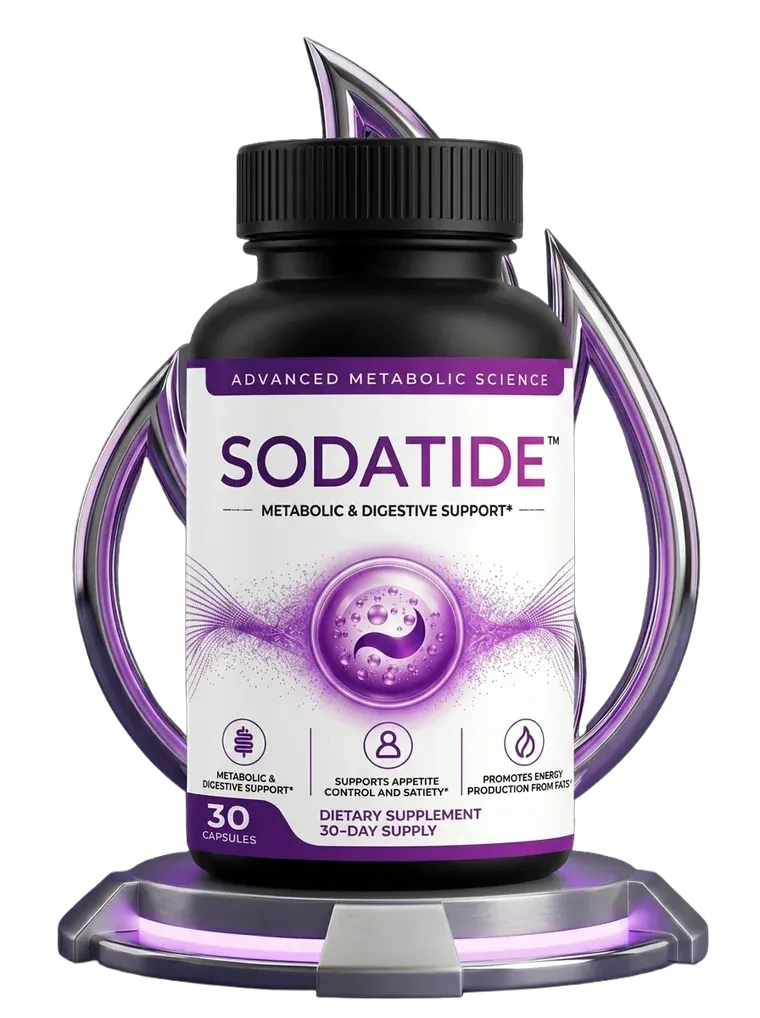
How Does Sodatide Work? From Fiber to Fullness Signals
Sodatide works in the gut, where bacteria ferment its fibers.
Its 211 mg of inulin and 100 mg of resistant starch reach the colon and become short-chain fatty acids, which can raise fullness hormones like GLP-1 and PYY. Studies tested the ingredients, not Sodatide.
See all the ingredients.
How does Sodatide work, in short?
Sodatide works through the gut, not the bloodstream. Its two fibers feed the bacteria in your colon, and its three probiotic strains add bacteria of their own.
When bacteria ferment fiber, they make short-chain fatty acids. Those compounds can send fullness signals and support the gut lining. The label claims rest on that chain of events.
The food
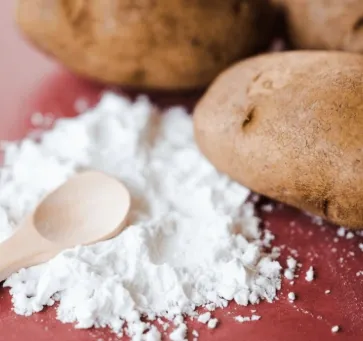
Chicory root inulin and potato resistant starch. Both are fibers your body cannot digest on its own.
The bacteria
B. infantis, C. butyricum and A. muciniphila, plus the bacteria already in your gut.
The signals
Short-chain fatty acids and gut hormones such as GLP-1 and PYY.
The Sodatide gut pathway, step by step
The Sodatide pathway runs in seven steps, from swallowing the capsule to the signals that follow. Each step links to a human study that tested it.
The fibers skip digestion
Inulin and resistant starch pass through the stomach and small intestine without breaking down. They arrive in the colon mostly intact (Baxter et al., 2019).
Bacteria ferment the fibers
Colon bacteria break the fibers apart for energy. In a trial of 174 people, potato starch changed which bacteria grew (Baxter et al., 2019).
Helpful groups grow
At 3.5 g of potato starch a day, Bifidobacterium and Akkermansia counts rose over 4 weeks (Bush et al., 2023).
Short-chain fatty acids rise
Fermentation makes butyrate and related acids. Butyrate rose 29% on average, though 37% of people had no rise (Baxter et al., 2019).
Fullness hormones respond
Prebiotic fiber raised GLP-1 and PYY and lowered hunger ratings (Cani et al., 2009). Over 12 weeks, ghrelin fell and people ate less (Parnell and Reimer, 2009).
Fat use and insulin shift
Resistant starch raised insulin sensitivity (Robertson et al., 2005). In one meal study, fat burning rose 23% at a low dose (Higgins et al., 2004).
Akkermansia supports the lining
A pasteurized form of Akkermansia improved insulin sensitivity over 3 months (Depommier et al., 2019).
Where in the gut does Sodatide act?
Sodatide does almost all of its work in the colon, the last part of the gut. The earlier stops matter too, because they decide what reaches it.
| Part of the gut | What happens to the capsule | Time frame |
|---|---|---|
| Stomach | The plant-based shell softens and opens. The powder mixes with food and water. | Minutes |
| Small intestine | Normal starch and sugar are absorbed here. Inulin and resistant starch are not. | A few hours |
| Colon | Bacteria ferment both fibers and release short-chain fatty acids. | Hours after arrival |
| Gut wall | Cells respond to those acids and release hormones such as GLP-1 and PYY. | After fermentation starts |
| Gut bacteria as a whole | The mix of bacteria slowly shifts with daily fiber. | Weeks in the trials |
The time frames are general for dietary fiber. They were not measured for this product.
Which Sodatide ingredient drives each step?
Each Sodatide ingredient feeds into a different part of the pathway. Some steps rely on more than one.
| Ingredient | Amount | Main step | Supporting step |
|---|---|---|---|
| Chicory root inulin | 211 mg | Feeds Bifidobacteria | Fullness hormones (GLP-1, PYY) |
| Potato resistant starch | 100 mg | Butyrate production | Insulin sensitivity, fat use |
| B. infantis | Part of 36 mg | Ferments inulin | Adds to Bifidobacteria |
| C. butyricum | Part of 36 mg | Makes butyrate directly | Supports the colon lining |
| A. muciniphila | Part of 36 mg | Lives in the mucus layer | Insulin sensitivity |
Full notes on each one are on the Sodatide ingredients page.
How each Sodatide label claim maps to a mechanism
Each of the three Sodatide label claims points to a different part of the pathway. The evidence behind them is not equally strong, so the table rates each one.
| Label claim | Mechanism | Key studies | Evidence strength |
|---|---|---|---|
| Metabolic & Digestive Support | Fiber fermentation, more stools, better insulin response | (Micka et al., 2017) (Baxter et al., 2019) (Bush et al., 2023) (Robertson et al., 2005) (Depommier et al., 2019) | Moderate for the ingredients at gram doses |
| Supports Appetite Control And Satiety | Short-chain fatty acids raise GLP-1 and PYY, ghrelin falls | (Cani et al., 2009) (Parnell and Reimer, 2009) | Limited: small trials, 16 to 21 g a day |
| Promotes Energy Production From Fats | More fat burned after a meal with resistant starch | (Higgins et al., 2004) | Weak: one single-meal study using corn starch; the effect vanished at the higher dose |
The strength ratings are ours. They reflect study size, length and dose. The benefits page covers each claim in more depth.
Has Sodatide itself been tested?
No. No published study has tested the finished Sodatide capsule. Every study on this page tested one ingredient at a time, or a related fiber.
That is common for supplements. Makers often build a formula from ingredient research instead of testing the final product. It still matters when you set your expectations.
Short-chain fatty acids: the key link in the Sodatide pathway
Short-chain fatty acids are the main link between the Sodatide fibers and any effect you might feel. They are small molecules that bacteria release when they ferment fiber.
Chief among them: acetate, propionate and butyrate. Butyrate is the one fiber research tracks most. Cells lining the colon use it as fuel.
Short-chain fatty acids also act as messengers. They can prompt cells in the gut wall to release hormones that tell the brain you have eaten. That is the step behind the appetite claim.
Why butyrate gets the most attention
Butyrate is easy to measure in stool samples, so trials track it closely. The 29% average rise with potato starch hides a wide spread (Baxter et al., 2019). More than a third of the people in that trial had no measurable rise. Averages tell you what a group did, not what you will feel.
What is GLP-1, and how does it relate to Sodatide?
GLP-1 is a hormone your gut makes after you eat. Sodatide does not contain it. In one trial, prebiotic fiber raised the body's own GLP-1 (Cani et al., 2009).
GLP-1 slows how fast the stomach empties and signals fullness. Prescription GLP-1 drugs copy this hormone at strong doses. A fiber capsule works in a very different and much milder way.
- Sodatide is a dietary supplement, not a drug
- It adds no hormone to your body
- It is not a replacement for any prescribed medicine
Why does Sodatide pair fiber with probiotics?
Sodatide pairs fiber with probiotics so the bacteria arrive with their food. This idea is called a synbiotic.
B. infantis can ferment inulin. C. butyricum turns fiber into butyrate. In the potato starch trial, Akkermansia counts rose on the fiber alone (Bush et al., 2023). Adding the strains and the fibers together aims to support each step at once.
Read more about the strain in what Akkermansia is.
What affects how well the Sodatide pathway works?
How the Sodatide pathway plays out depends on your own gut and your habits. The same fiber gave different results in different people.
Your starting bacteria
People begin with different gut bacteria. That is one reason some showed no butyrate rise.
The rest of your diet
Fiber from vegetables, beans and whole grains feeds the same bacteria.
Daily consistency
Gut bacteria shifted over weeks in the trials. Skipped days slow that down.
Storage
Heat and damp can weaken live probiotics. The label asks you to refrigerate after opening.
See the daily routine and the results timeline for what to expect week by week.
How Sodatide works: common questions
Does Sodatide work in the stomach or the gut?
Sodatide works mainly in the colon. The two fibers pass the stomach and small intestine undigested and are fermented by bacteria further down.
Does Sodatide contain GLP-1?
No. Sodatide contains no hormone and no drug. In studies, prebiotic fiber raised the body's own GLP-1, which is a different thing.
Why does Sodatide include Akkermansia?
Akkermansia lives in the gut's mucus layer. A 3-month trial of a pasteurized form linked it to better insulin sensitivity. The label does not give its cell count.
Has a clinical trial tested Sodatide itself?
No published study has tested Sodatide itself. The research on this page tested the separate ingredients, mostly at much larger doses.
How long does the gut pathway take?
Fermentation starts within hours of fiber reaching the colon. Shifts in gut bacteria took 2 to 4 weeks in the fiber trials cited here.
Will Sodatide work the same for everyone?
No. In one large fiber trial, 37% of people showed no rise in butyrate. Your starting gut bacteria make a difference.