How to Read a Probiotic Supplement Label: CFU, Strains and Blends
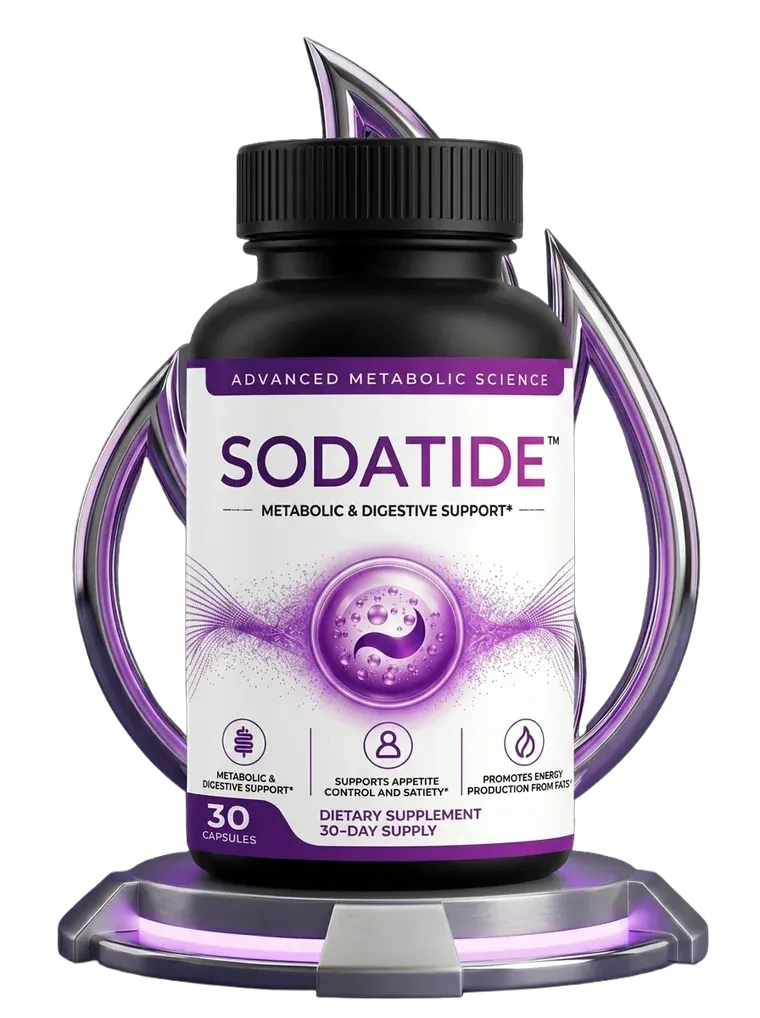
To read a probiotic label, check three things: the full strain name with a strain ID, the CFU count, and whether strains hide inside a blend. Typical products carry 1 to 10 billion CFU. The Sodatide label names three species in a 36 mg blend but gives no CFU count and no strain IDs.
Where is the key information on a probiotic label?
Most of what matters sits in the Supplement Facts panel. The rest is spread across the suggested use, storage, caution and fine print around it.
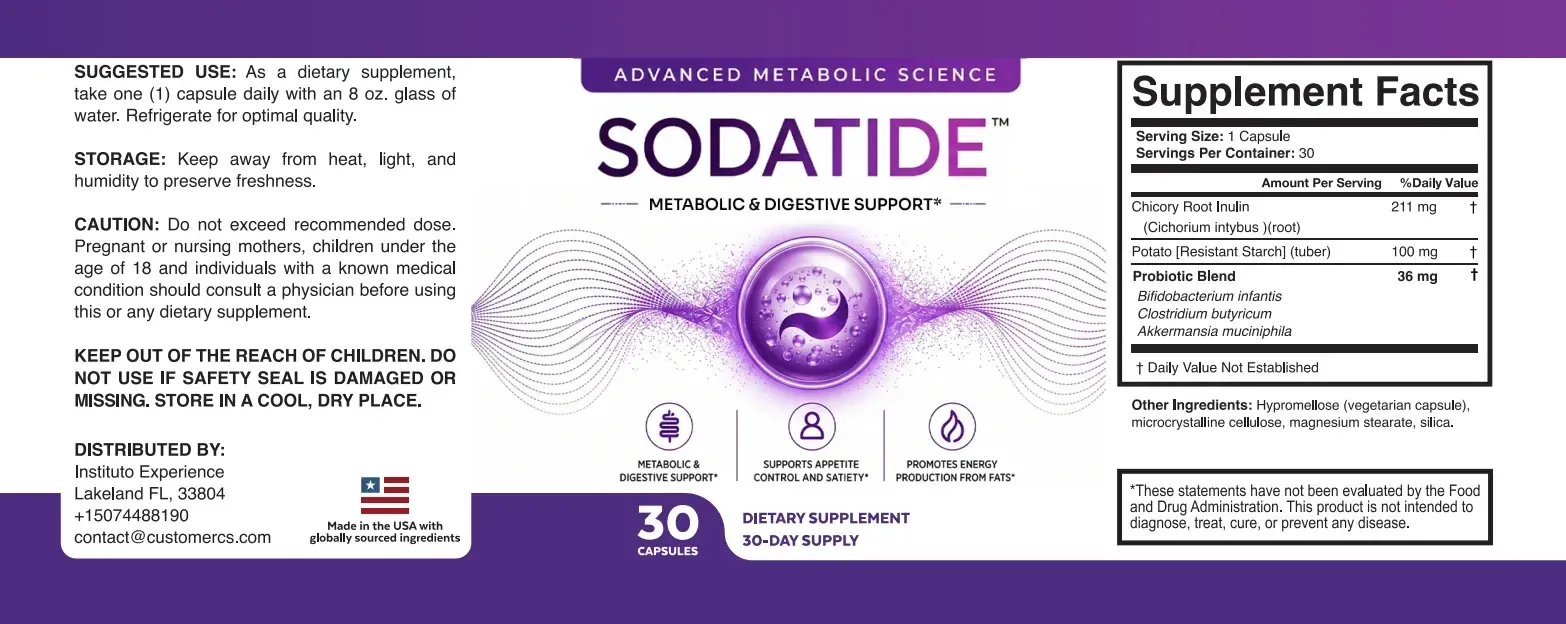
We use the Sodatide label as the worked example in this guide. It is a good teaching case because some parts are clear and some are missing.
What do genus, species and strain mean on a label?
Every probiotic has a three-part name: genus, species and strain. Labels often give the first two and skip the third, which is the one research depends on.
| Part | What it tells you | Example from Sodatide |
|---|---|---|
| Genus | The broad family | Bifidobacterium |
| Species | The type within that family | infantis |
| Strain ID | The exact line, as a code of letters or numbers | Not given |
Effects depend on the strain, not just the species (NIH ODS, 2025). Two strains of the same species can act in different ways. A study on one strain does not carry over to another.
Safety data also belongs to a strain. One tested strain of Clostridium butyricum, called MIYAIRI 588, lacked major toxin genes in lab and rodent tests (Isa et al., 2016). That result tells you nothing about an unnamed strain of the same species.
What is CFU, and why does it matter more than milligrams?
CFU means colony-forming units. It estimates how many live cells in one serving can grow, and it is the standard way to dose a probiotic.
CFU counts live cells
Typical probiotic products carry 1 to 10 billion CFU per serving (NIH ODS, 2025).
Milligrams count weight
Weight includes dead cells, carrier powder and anything else in the blend. It does not tell you how many cells are alive.
Timing matters
Cells die over time. A count “at expiration” is more useful than a count “at manufacture.”
The Sodatide label gives its probiotic blend as 36 mg. With no CFU count, there is no way to tell how many live cells each capsule holds. It also cannot be compared with a study that used a set number of cells, as the Akkermansia research did.
How should you read a proprietary blend?

A blend lists several ingredients under one total weight. You see what is inside, but not how much of each.
The Sodatide blend is 36 mg for three species together. It could be split evenly, or it could be almost all one strain. The label does not say.
What a clear blend looks like
- Each strain named with genus, species and strain ID
- A CFU count for the whole blend, or for each strain
- A note on whether the count holds until expiration
Reading the Sodatide label, line by line
Here is the Sodatide label checked against what a complete probiotic label shows. It scores well on the fibers and the fine print, and falls short on the probiotic details.
| Label item | What a complete label shows | What Sodatide shows |
|---|---|---|
| Serving size | Capsules per serving | 1 capsule, 30 servings |
| Fiber amounts | Weight of each fiber | Inulin 211 mg, resistant starch 100 mg |
| Probiotic species | Genus and species | B. infantis, C. butyricum, A. muciniphila |
| Strain IDs | A code after each species | Not given |
| CFU count | Billions of live cells, ideally at expiration | Not published; 36 mg blend weight only |
| Other ingredients | Capsule shell and fillers | Hypromellose, microcrystalline cellulose, magnesium stearate, silica |
| Storage | How to keep cells alive | Refrigerate; keep from heat, light and humidity |
| FDA disclaimer | Required with any claim | Present |
Two gaps stand out: no CFU count and no strain IDs. You can ask the order desk for both before you buy, and see the panel up close on the supplement facts page.
Checked the Sodatide label and still curious?
Every ingredient amount is printed, and the 60-day money-back window runs from your purchase date. Packs are priced at checkout.
What do the claims and the asterisk mean?
The asterisk after a claim means the FDA has not reviewed it. Claims such as “supports digestion” are structure/function claims, and they must carry that disclaimer (FDA, 2024).
The FDA is not authorized to approve dietary supplements before they are sold (FDA, 2022). So no supplement label can honestly say “FDA approved.” The Sodatide label makes three claims, each with the asterisk:
- Metabolic & Digestive Support
- Supports Appetite Control And Satiety
- Promotes Energy Production From Fats
A claim tells you what the maker hopes the product supports. It is not proof that it works at the dose in the bottle.
Storage, dates and other ingredients: the fine print
The fine print tells you how to keep the probiotic alive and what else is in the capsule. It also shows who stands behind the product.
Storage
The Sodatide label says to keep it away from heat, light and humidity. The seller adds that you should refrigerate after opening to protect the probiotics. Live cells die faster when warm or damp.
Dates
A best-before or expiry date tells you how long the count should hold. The label artwork we have does not show one. Check the bottle itself, and ask the order desk if you cannot find it.
Other ingredients
These are the non-active parts. In this case they are a vegetarian capsule shell and three common flow aids. None are sugars or stimulants.
Who should be careful with probiotic strains?
Most healthy adults take probiotics without trouble. People who are very ill or have a weak immune system face a rare but real risk.
In Japan, five hospital patients developed bloodstream infections linked to Clostridium butyricum probiotics (Sada et al., 2024). Most of them had weak immune systems. That species is one of the three in Sodatide.
A 6-step checklist for any probiotic label
You can check any probiotic label in about two minutes. Work through these six steps in order.
Find the Supplement Facts panel
Start here. Note the serving size and how many servings are in the bottle.
Read each strain name
Look for genus, species and a strain ID. Missing IDs make research matching impossible.
Find the CFU count
Look for billions of CFU, ideally stated at expiration. Milligrams alone are not enough.
Check for blends
A blend with one total weight hides the amount of each strain.
Read the claims
An asterisk means the FDA did not review the claim.
Check storage and dates
Follow the storage advice and look for a best-before date.
Probiotics often come paired with fiber. Our post on inulin vs. resistant starch explains the two fibers in Sodatide.
Probiotic labels: common questions
What does CFU mean on a probiotic label?
CFU stands for colony-forming units. It is an estimate of how many live cells in a serving can grow and multiply. Typical products carry 1 to 10 billion CFU.
Is a higher CFU count always better?
No. The right strain matters more than a big number, because effects depend on the exact strain. A high count of an unstudied strain does not beat a studied strain at its tested dose.
What is a strain ID?
It is the code of letters or numbers after the species name. It tells you which exact strain is in the bottle, so you can match it to research.
Why do some labels list milligrams instead of CFU?
Milligrams show the weight of the powder, which can include dead cells and carrier. It is legal, but it does not tell you how many live cells you get.
Is a CFU count printed on the Sodatide label?
No. The Sodatide label lists a 36 mg probiotic blend of three species. It does not give a CFU count or strain IDs.
Does the FDA approve probiotic supplements?
No. The FDA is not authorized to approve dietary supplements before they go on sale. Claims like “supports digestion” are not reviewed by the FDA.