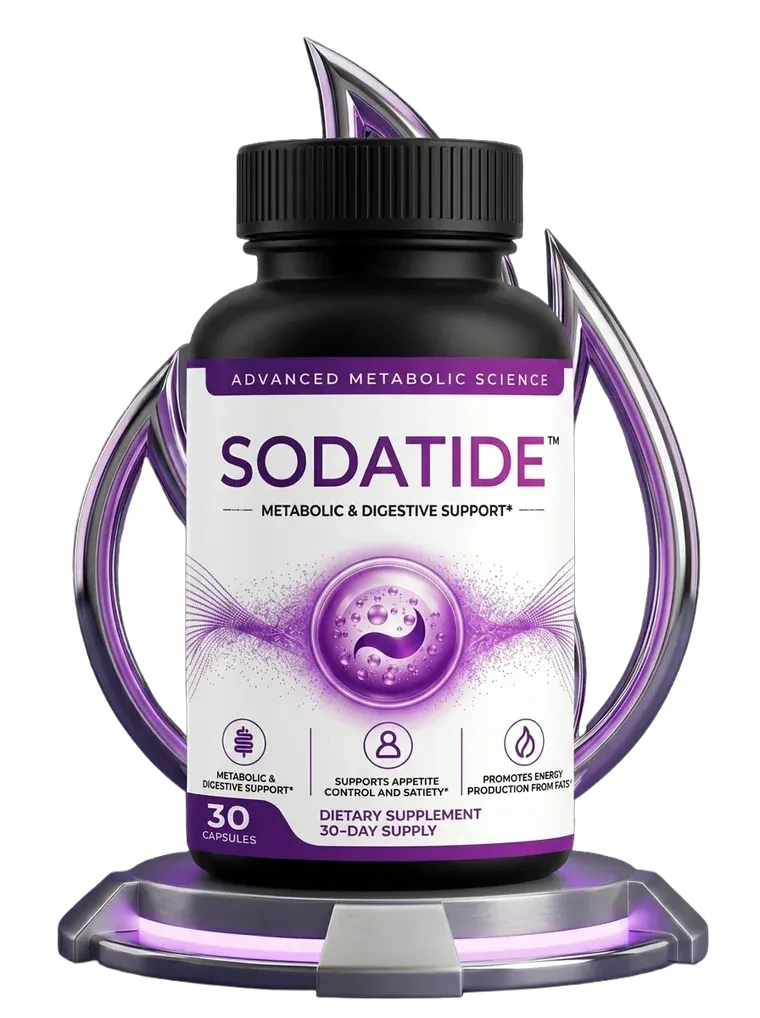
Is Sodatide third party tested? What the seals prove and what they do not
Is Sodatide third party tested? No independent lab report is published, so this site cannot say yes. The seals in the sales material name no certifier, apart from claims the label itself backs, such as Made in USA and the vegetarian capsule. Ask the order desk what testing it can share before you rely on a seal.
Is Sodatide third party tested?
Is Sodatide third party tested? The plain answer is that no independent lab report is published. This site does not hide that. A first-time buyer who wants proof of testing should know it before ordering.
Third party testing means a lab that does not work for the seller checks a batch and writes a report. A report usually names the lab, the batch and what was measured. None of that is printed for Sodatide. The batch references shown on this site are draft labels, not lab proof.
That does not mean no testing happened. It means we cannot confirm it. The label and the seller pages give us a few seals, and we can explain what each one means. We can also say which ones the printed label supports.
Key facts
- No independent lab report is published for Sodatide.
- The lot and certificate references on this site are draft labels, not lab proof.
- Most seals in the sales material name no certifier.
- The label backs Made in USA in part and the vegetarian capsule.
- A registered factory is not an approved product. Sodatide is not FDA approved.
- The CFU count and strain IDs for the probiotic blend are not published.
- The 60-day window runs from purchase and covers money, not health.
What do the seals on a Sodatide bottle mean?
Ten seals appear in the sales material. Most name no certifier, which limits what they can prove. Here is each one in plain words.
| Seal | What it means | What it does not mean | Can we verify it? |
|---|---|---|---|
| GMP | Made under good manufacturing practice rules | That the product was tested or works | No certificate or certifier is named |
| FDA-registered facility | The factory is registered with the FDA | That the FDA approved or checked the product | No, the facility is not named |
| Non-GMO | Made without genetically modified ingredients | Organic, or tested by a third party | No verifying body is named |
| Made in USA | Manufactured in the United States | That every ingredient is from the US | Partly: the label says made in the USA with globally sourced ingredients |
| Guaranteed Pure | A general promise of purity | A lab result of any kind | No definition and no lab report |
| Doctor Formulated | A doctor helped design the formula | That a doctor endorses it for you | No, the formulator is not named |
| Vegetarian | No animal-derived ingredients | Vegan certified | Mostly: the label lists a vegetarian capsule shell |
The rest of the ten seals cover gluten free, dairy free and 100% natural ingredients. The label supports those only in part. The testing and quality page has the full table.
Which claims does the label back, if Sodatide is not third party tested?
The printed bottle is stronger evidence than a seal. Two lines on the label carry real weight.
- “Made in the USA with globally sourced ingredients.” This backs the Made in USA seal in part, since some ingredients come from other countries.
- A hypromellose capsule, described as vegetarian. This supports the vegetarian seal. The source of the magnesium stearate is not stated.
- A full Supplement Facts panel with exact amounts: 211 mg chicory root inulin, 100 mg potato resistant starch and a 36 mg probiotic blend.
The label also carries the FDA notice that its three claims were not evaluated. Registration of a factory is not approval of a product, and the FDA cannot approve supplements before they are sold. Any seller who says Sodatide is “FDA approved” is wrong. Our post on seven label checks explains this for any supplement.
What would make Sodatide third party tested and checkable?
You can judge any supplement by what a proper test report shows. If a lab report for Sodatide were published, a careful buyer would look for these things.
A named lab
Who tested the batch? A report with no lab name cannot be checked.
A batch match
The lot on the report must match the lot on the base of your bottle.
What was measured
Purity, the amounts of each active, and the live cell count of the probiotics are all useful.
A date
A report from years ago may not cover the batch in your hand.
A way to verify
A report you can confirm with the lab is worth more than a PDF with a logo.
The CFU count for the 36 mg probiotic blend is also not published. Without it, nobody can judge how many live cells a capsule holds. Our probiotic label guide explains why that number matters.
What can a first-time buyer do when Sodatide is not third party tested?
You still have good options. None of them needs a lab.
- Call the order desk and ask what testing it can share. Write down the answer.
- Ask for the strain IDs and the CFU count. The site says you can raise these with the desk.
- Compare your bottle with the label image on the batch verify page.
- Check that the safety seal is whole before the first capsule.
- Use the 60-day window. It runs from the purchase date and lets you ask for your money back.
The window covers money, not health. If you have a health worry, a doctor comes first. The batch verify page lists the red flags to watch for.
Who should wait for a lab report?
If a published lab report is a must for you, wait. That is a fair standard. Some buyers set the same rule for every supplement, and the buyer’s checklist can help you write your own.
Wait too if you have a medical condition, take medicine or have a weak immune system. The label asks pregnant or nursing mothers and anyone with a known medical condition to see a physician first. Live probiotics carry a rare infection risk in people with weak immune systems. A doctor can weigh that for you.
Frequently asked questions
Is Sodatide third party tested?
No independent lab report is published, so this site cannot confirm third party testing. Ask the order desk what testing it can share.
Does the GMP seal mean it was tested?
No. It says the product is made under good manufacturing practice rules. No certifier or certificate is named, and the seal does not mean the product was tested.
Does an FDA-registered facility mean FDA approval?
No. Registration describes the factory. The FDA does not approve supplements before sale and does not issue registration certificates.
Is Sodatide made in the USA?
The label says it is made in the USA with globally sourced ingredients. So the capsule is finished in the US while some ingredients come from other countries.
Where can I see a certificate of analysis?
None is published. The certificate reference on this site is a draft label and not a report.
What if I want to return it?
Yes, inside the window. You have 60 days from purchase to ask for your money back. Phone the order desk and quote your order ID.
Our view
Sodatide is not shown to be third party tested, and we will not pretend otherwise. The seals describe how a product is made, not who checked it. The printed label is the stronger source, and it backs only some of them.
That leaves a first-time buyer with a clear task: ask the desk what testing exists, check the bottle when it arrives, and use the 60-day window if the answers do not satisfy you. If a lab report matters to you, wait for one.
This guide is general information written by the Sodatide Editorial Desk. It is not a medical opinion.
Last updated