Are Weight Loss Supplements Safe or FDA Approved? Seven Label Checks
No dietary supplement, weight loss or otherwise, gets FDA approval ahead of sale. Safety depends on the ingredients, the dose and your health. Run seven label checks on any product. Sodatide is not FDA approved, and its label says the FDA has not evaluated its three claims.
Are any weight loss supplements FDA approved?
No. The FDA gives no pre-sale approval to dietary supplements. That rule covers weight loss products, vitamins, fibers and probiotics alike (FDA, 2022). If a bottle or an ad says “FDA approved,” treat that as a red flag.
What the FDA does allow is a different thing. A maker may print a structure and function claim, such as “supports appetite control.” The maker does not need to ask the FDA first. The label must then carry a statement that the FDA has not evaluated the claim, and that the product is not intended to diagnose, treat, cure or prevent any disease (FDA, 2024).
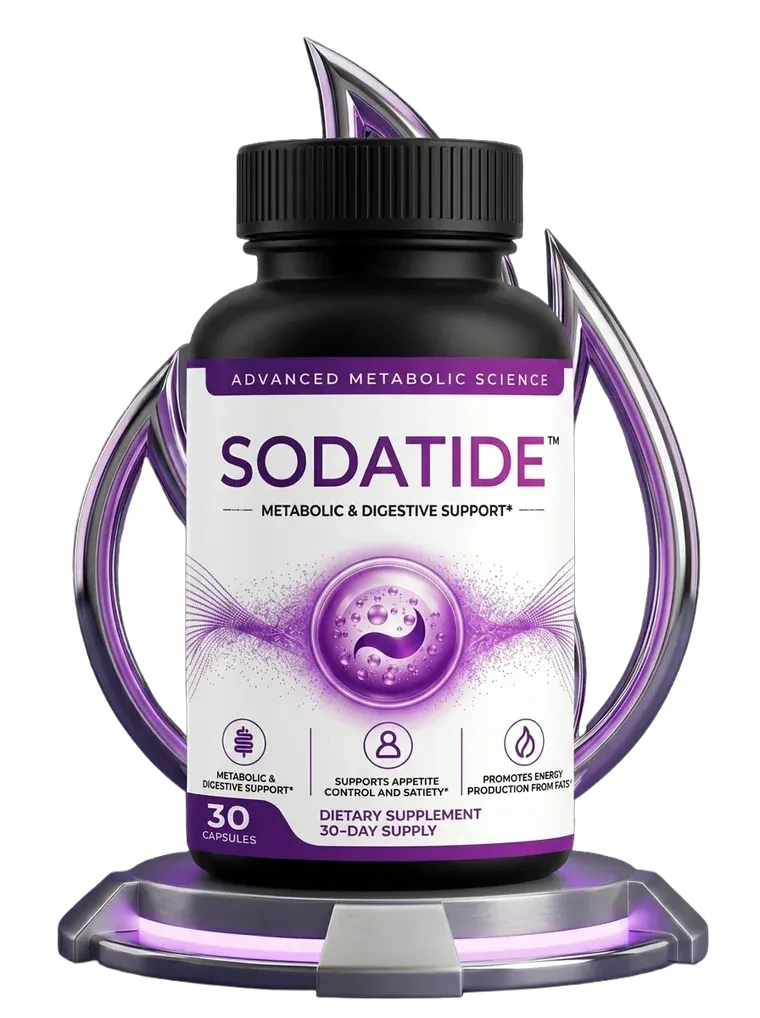
Sodatide’s label follows this pattern. Each of its three claims ends with an asterisk, and the statement appears on the bottle. That is a legal requirement being met. It is not a sign of approval.
Key facts
- The FDA gives no pre-sale approval to dietary supplements (FDA, 2022).
- Structure and function claims need no FDA approval but must carry the FDA statement (FDA, 2024).
- “FDA-registered facility” describes a factory, not a product.
- Safety depends on ingredients, dose, your health and your medicines.
- Sodatide is not FDA approved. Its three claims carry the FDA asterisk statement.
- Sodatide lists no stimulant, and no weight-loss claim appears on its label.
- Anyone with a medical condition, on medicine, pregnant or nursing should ask a doctor first.
What does “FDA-registered facility” really mean?
It means the factory is registered with the FDA. Food and supplement plants register so the agency knows where they are. The FDA does not issue registration certificates, and registration is not an inspection result or an approval of any product (FDA, 2024 (registration)).
Sales material for Sodatide shows an FDA-registered facility seal. We read it as a statement about the factory. The facility is not named, so we cannot check it. The testing and quality page says the same.
A good habit follows from this. When a seal shows a logo, ask what it proves. If the answer is “nothing about the product,” give it little weight.
Are weight loss supplements safe?
It depends on what is in them, how much, who takes them and what else that person uses. No single answer covers the whole category, and we hold no data on other brands. We can say what to look for.
Safety questions are sharper for some groups. They include people who are pregnant or nursing, people under 18, people with a medical condition and people on prescription medicine. A doctor or pharmacist can check a full ingredient list against your own history.
The FDA does not review supplements for safety before they reach shelves (FDA, 2022). So the burden of checking falls on the reader. The seven checks below are built for that.
What are seven checks you can run on any label?
Take the bottle, or a clear photo of it, and go down this list. Each check takes about a minute.
Read the exact claims
Are they about “support,” or do they promise weight loss, a cure or a speed? Does the FDA statement appear?
Find every amount
Each active should show a number. Watch for a blend that hides the split.
Look for stimulants
Caffeine and similar ingredients matter for heart rate, sleep and some medicines.
Look for a live-cell count
A probiotic needs a CFU figure, or you cannot compare it with any study.
Check the caution panel
Does it name pregnancy, nursing, age and medical conditions?
Ask what was tested
Was the finished product tested, or only the ingredients? Is a lab report published?
Check the buying terms
Who sells it, who handles refunds, how long is the window and is the charge one-time?
How does Sodatide score on those seven checks?
We hold ourselves to the same list. Here is the honest result, with the weak spots included.
| Check | What the label and terms show |
|---|---|
| 1. Claims | Three “support” claims with the FDA statement. No weight-loss claim. |
| 2. Amounts | 211 mg inulin, 100 mg resistant starch, 36 mg probiotic blend. The blend’s split is not printed. |
| 3. Stimulants | None listed. |
| 4. Live-cell count | Not published. Strain IDs are not published either. |
| 5. Caution panel | Names pregnant or nursing mothers, anyone under 18 and anyone with a known medical condition. |
| 6. Testing | No study of the finished capsule. No independent lab report published. |
| 7. Buying terms | 60-day window from purchase. Phone the order desk and quote your order ID. Buyer pays return shipping. Prices at checkout. |
Two things stand out. The label is short and honest about amounts. And two gaps matter: no CFU count and no lab report. We say so on every page.
Are weight loss supplements effective?
Again it depends on the product, and we hold no category-wide data. For Sodatide, we can be specific. The research behind its ingredients is real but used far larger doses. Chicory inulin trials ran at 12 to 21 g a day, and potato resistant starch trials at 3.5 to 34 g a day. One capsule has 211 mg and 100 mg.
In those trials, weight change was small or not significant. For example, a 3-month Akkermansia trial found no significant weight change (Depommier et al., 2019). The label makes no weight-loss claim, so we do not either.
The honest frame is this. A fiber and probiotic capsule may support gut function over weeks. It is not a replacement for food, sleep, movement or medical care. If weight is a health concern, a doctor is the right first stop.
What should you do before you buy any of them?
- Photograph the label and keep it with your order ID.
- Show it to your doctor or pharmacist if you take medicine or have a condition.
- Never stop or change a prescription to take a supplement.
- Buy from a seller with a phone line and a clear refund window.
- Judge it over weeks, with notes, and decide before the window closes.
Our buyer’s checklist covers product types, and the disclaimer page sets out the medical, FDA and earnings notes for this site.
Frequently asked questions
Are weight loss supplements FDA approved?
No. The FDA gives no pre-sale approval to dietary supplements, so a claim of FDA approval on one is a red flag.
Is Sodatide FDA approved?
No. Sodatide is a dietary supplement, and no supplement is approved before sale. Its label says the FDA has not evaluated its three claims.
What does an FDA-registered facility mean?
It means the factory is registered with the FDA. It does not mean the FDA approved or tested the product, and the FDA does not issue registration certificates.
Are weight loss supplements safe?
It depends on the ingredients, the dose and your health. Pregnant or nursing women, people under 18, people with a medical condition and people on medicine should ask a doctor first.
Does Sodatide make a weight loss claim?
No. The label claims metabolic and digestive support, appetite control and satiety, and energy production from fats. It makes no weight-loss promise.
What is the first thing to check on a supplement label?
Read the exact claims and find the FDA statement. Then check that every active ingredient has an amount, and look for stimulants and a live-cell count.
Our view
No label can make a supplement safe for you. A short, honest label is a good sign, and a missing number is a warning. Sodatide has the first and two of the second.
Use the seven checks on every product you consider, including ours. If a seller cannot answer them, that tells you something.
This page is general information from the Sodatide Editorial Desk. Medical review is pending. Your doctor knows your history, and we do not.
Last updated