Fat Burner, Appetite Suppressant or Metabolism Booster? Where Sodatide Fits
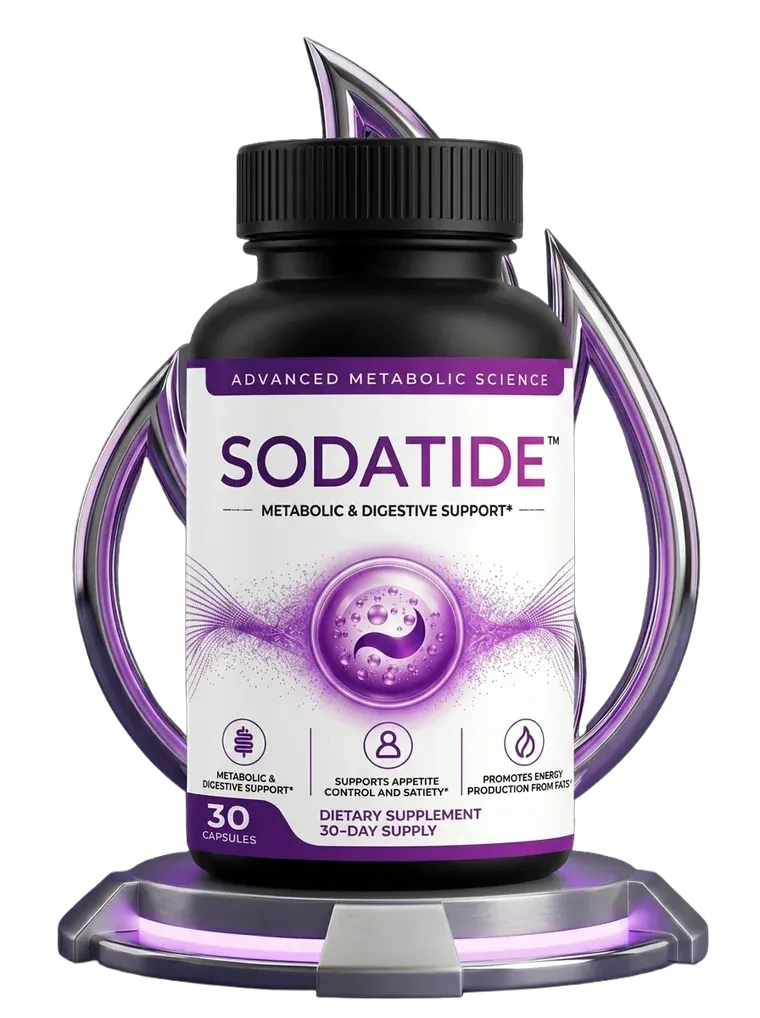
Sodatide’s label uses none of those three terms. It claims metabolic and digestive support, appetite control and satiety, and energy production from fats. Its actives are two fibers and a probiotic blend, with no stimulants listed. It is not a drug, not a GLP-1 medicine and not a promise of weight loss.
What do “fat burner,” “appetite suppressant” and “metabolism booster” mean?
These are everyday labels that sellers and shoppers use. They are not legal categories for supplements. A seller can put any of the three words in an ad. What the bottle may legally claim is a separate matter.
In the United States, a supplement label may use structure and function claims. Those describe an effect on the body’s normal structure or function. The maker does not need FDA approval first, but the label must carry a statement that the FDA has not evaluated the claim (FDA, 2024).
So the words in an ad can go further than the bottle. The sensible move is to ignore the nickname and read the claim on the label and the list of ingredients. That is how we treat Sodatide on this site.
What does the Sodatide label actually claim?
Three things, word for word: “Metabolic & Digestive Support,” “Supports Appetite Control And Satiety” and “Promotes Energy Production From Fats.” Each ends with an asterisk. The asterisk points to the FDA statement that these claims have not been evaluated and that the product is not intended to diagnose, treat, cure or prevent any disease.
You can see why people sort it under different nicknames. The second claim sounds like an appetite suppressant. The third sounds like a fat burner. The first sounds like a metabolism booster. But the label uses none of those terms, and each claim says “supports” or “promotes,” not “suppresses,” “burns” or “boosts.”
| Nickname | Nearest Sodatide claim | How the label words it |
|---|---|---|
| Metabolism booster | Metabolic & Digestive Support | Support, with an asterisk |
| Appetite suppressant | Supports Appetite Control And Satiety | Support, with an asterisk |
| Fat burner | Promotes Energy Production From Fats | Promotes, with an asterisk |
What is inside, and how is it different from a stimulant product?
Each capsule has three actives. There is 211 mg of chicory root inulin, 100 mg of potato resistant starch and a 36 mg probiotic blend of Bifidobacterium infantis, Clostridium butyricum and Akkermansia muciniphila. The helper ingredients are hypromellose, microcrystalline cellulose, magnesium stearate and silica.
No caffeine, green tea extract, sweetener or drug is on the label. The two fibers feed bacteria in the colon. The probiotic blend adds bacteria. That is the whole plan, and it is quite different from a product built around a stimulant.
We will not describe the ingredients of other brands, because we hold no facts about them. If you are comparing, read each label for the same things: every active, its amount, whether a blend hides the split and whether a live-cell count is printed. Our post on reading a probiotic label shows how.
Key facts
- Fat burner, appetite suppressant and metabolism booster are sales terms. They are not legal categories.
- Sodatide’s label uses three claims: metabolic and digestive support, appetite control and satiety, and energy production from fats.
- Actives: 211 mg chicory root inulin, 100 mg potato resistant starch, 36 mg probiotic blend.
- No caffeine or stimulant is listed on the label.
- Sodatide is not a GLP-1 drug and has no medicine in it.
- The label claims are not FDA evaluated, and the product is not FDA approved.
- No study has tested Sodatide itself. Ingredient studies used much larger doses.
Does it work like a fat burner or an appetite suppressant?
The research behind the claims is real but modest, and it used much more fiber than a capsule holds. In a 2-week trial, prebiotic fiber lowered hunger and raised the gut hormones GLP-1 and PYY (Cani et al., 2009). Over 12 weeks, people ate less and ghrelin fell (Parnell and Reimer, 2009). Those trials were small and used a close cousin of inulin.
The fat claim has the thinnest support. In single test meals, fat burning rose 23% when 5.4% of the carbohydrate was resistant starch, but the study used corn starch and 12 people (Higgins et al., 2004). The effect showed at the lower dose and not the higher one.
Sodatide’s fibers add up to about 0.3 g. The studies used 3.5 to 34 g of resistant starch and 12 to 21 g of inulin a day. No published study has tested the finished capsule. So we cannot say it works like any product with a stronger name.
Is Sodatide a GLP-1 drug?
No. GLP-1 is a hormone your gut makes after you eat. In one trial, prebiotic fiber raised the body’s own GLP-1 (Cani et al., 2009). Prescription GLP-1 drugs copy that hormone at strong doses. Sodatide contains no hormone and no drug.
Some ads blur this line. If an ad promises a GLP-1 effect from a capsule, that claim is not on the label. Do not stop or change a prescribed medicine to take Sodatide. If you use a GLP-1 prescription, ask your doctor before adding any supplement.
How should you compare Sodatide with other weight loss supplements?
Compare by evidence and by label, not by nickname. Here is a short list you can run on any product, ours included.
- What are the exact claims, and do they carry the FDA statement?
- Is every active ingredient listed with an amount?
- Is there a stimulant, and how much?
- Is a live-cell count printed for any probiotic?
- Has the finished product been tested, or only the ingredients?
- What is the refund window and who handles it?
For Sodatide the answers are: three claims with the statement, three actives with amounts, no stimulant, no CFU count, no test of the finished capsule and a 60-day window handled by a phone desk.
The buyer’s checklist goes further, and the how it works page shows the gut pathway step by step.
Frequently asked questions
Is Sodatide a fat burner?
The label never uses that name. It claims metabolic and digestive support, appetite control and satiety, and energy production from fats, with the FDA asterisk. It lists no stimulant.
Is Sodatide an appetite suppressant?
The label says “Supports Appetite Control And Satiety,” not “suppresses.” The research behind it used small trials and much larger fiber doses than one capsule holds.
Is Sodatide a metabolism booster?
The first label claim is “Metabolic & Digestive Support.” The label does not use the word booster, and it makes no promise about speed or size.
Does Sodatide contain caffeine?
No. No caffeine or other stimulant appears on the label. The actives are two fibers and a probiotic blend.
Is Sodatide a GLP-1 drug?
No. It contains no hormone and no drug. In one trial, prebiotic fiber raised the body’s own GLP-1, which is a different thing from a prescription GLP-1 medicine.
Is Sodatide FDA approved?
No. Supplements are not approved by the FDA ahead of sale, and the FDA has not evaluated the label claims.
Our view
Sodatide does not fit neatly under any of the three nicknames, and we think that is honest. It is a small fiber and probiotic capsule with three careful claims. It is not a stimulant and not a drug.
If you want the strongest possible product in one of those categories, this is probably not it. If you want a quiet daily capsule with a short label, a clear dose and a 60-day window, it is worth a look.
This page is general information from the Sodatide Editorial Desk. Medical review is pending. Weight and appetite are health matters, so speak to your own doctor about them.
Last updated