Raw Potato Starch vs. Cooked-and-Cooled: The Resistant Starch This Label Actually Lists
Resistant starch is a category with at least five recognized types, not one ingredient. This label's line, Potato [Resistant Starch] (tuber) at 100 mg, names native raw potato starch, the type researchers classify as RS2. That is chemically and structurally different from the resistant starch that forms when a cooked potato, rice or pasta is cooled, known as RS3. Both resist digestion, but they get that property through different mechanisms, and several widely cited trials used one type and not the other.
Resistant starch is a category, not one ingredient
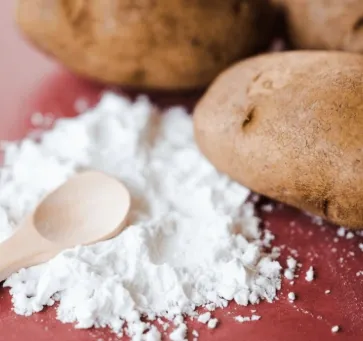
“Resistant starch” is a functional description, not a single molecule. It covers any starch that resists digestion by human enzymes in the small intestine and reaches the colon largely intact, the same end point inulin reaches by a different chemical route. Several distinct kinds of starch meet that description, and they get there through different structural mechanisms.
That distinction rarely survives the jump from a research paper to a headline. A popular article might say “cool your potatoes to make resistant starch” and a supplement label might say “potato resistant starch,” and a reader is left assuming both are talking about the same material. Often they are not.
The five recognized types of resistant starch
Nutrition science classifies resistant starch into five types, summarized in a widely cited review in the journal Advances in Nutrition (Birt et al., 2013). Each type resists digestion for a different structural reason.
| Type | What it is | Why it resists digestion | Typical source |
|---|---|---|---|
| RS1 | Physically trapped starch | Enzymes cannot reach it inside intact plant cell walls | Whole or partly milled grains, seeds, legumes |
| RS2 | Native, raw granular starch | A dense, semi-crystalline granule structure enzymes cannot penetrate while raw | Raw potato, raw banana, high-amylose corn |
| RS3 | Retrograded starch | Starch chains, once gelatinized by heat, realign into a new resistant crystal structure on cooling | Cooked-and-cooled potato, rice, pasta, bread |
| RS4 | Chemically modified starch | Chemical bonds added in processing (such as cross-linking) that enzymes cannot cut | Industrially modified food starches |
| RS5 | Amylose-lipid complexes | Starch chains bound to fat molecules in a resistant complex | Starch processed together with certain fats |
RS2 and RS3 are the two types most often discussed in consumer nutrition content, and they are the two relevant to this label, so the rest of this article focuses there.
What RS2 actually is, and why raw potato qualifies
RS2 resists digestion because of its physical, granular structure. In a raw potato, starch is packed into dense granules with a semi-crystalline arrangement that digestive enzymes cannot penetrate. The starch molecules themselves are not chemically altered; they are simply bundled too tightly, in the wrong physical form, for amylase to get at them.
Heat changes that. Cooking a potato gelatinizes the starch: water and heat swell the granules, break the tight packing apart, and expose the starch chains directly to digestive enzymes. That is why a baked or boiled potato is readily digestible starch, while the same potato, raw and unprocessed, is a meaningful RS2 source. High-amylose corn starch and raw banana starch resist digestion for the same structural reason.
The two starch components, amylose (a mostly straight chain) and amylopectin (a branched chain), are not split evenly between RS2 sources. Potato starch granules carry a substantial amylose fraction alongside amylopectin, and that granule architecture, not a special molecule unique to potatoes, is what blocks enzyme access while the starch stays raw. Milling, drying or otherwise processing the raw tuber into a powdered ingredient does not, on its own, gelatinize the starch, so a dried raw-potato starch powder can retain its RS2 character.
A supplement ingredient labeled simply “potato starch” or “potato resistant starch,” sourced from the raw tuber and not heat-processed into a retrograded form, is a native RS2 ingredient. The resistance comes from leaving the starch in, or close to, its raw granular state.
What RS3 actually is, and why cooling is the active step
RS3 starts from the opposite direction. It requires starch to first be cooked, gelatinized, fully digestible at that point, and then cooled. As the cooked starch cools, some of the straight-chain starch molecules (amylose) that were separated by heat re-associate into a new, tightly packed crystalline structure. That re-association is called retrogradation, and the resulting structure is resistant to digestion again, but it is a newly formed crystal, not the original raw granule.
This is the mechanism behind the “cook your rice or potatoes, then chill them” advice that circulates in diet articles. It is a real, measurable phenomenon: cooling measurably raises the resistant-starch content of cooked starchy foods compared with eating them hot. But it describes a kitchen process applied to cooked food, not a raw ingredient, and it produces a structurally different resistant starch than RS2.
Reheating cooked-and-cooled starch partially reverses the effect, since heat can re-gelatinize some of the retrograded crystal, though not all of it reverts.
Amylose content still matters for RS3, just at a different step. Starches higher in amylose tend to retrograde into more resistant starch on cooling than starches dominated by amylopectin, because the straighter amylose chains re-associate into tighter crystals more readily. That is one reason some RS3 advice specifically favors starchy foods like rice or legumes over others, rather than applying evenly to any cooked-and-cooled carbohydrate.
Why the type matters when you read a resistant-starch study
Research trials generally specify which type of resistant starch they used, because RS2 and RS3 are not interchangeable in study design, source, or typically in fermentation behavior. A 2019 controlled trial in 174 healthy adults, for example, specifically supplemented “resistant starch from potatoes” as a defined ingredient (alongside maize resistant starch and chicory inulin as separate arms) and found it produced the largest rise in short-chain fatty acids of the three fibers tested (Baxter et al., 2019). Trials like this typically draw on a defined, native potato starch ingredient, consistent with RS2, rather than home-cooked-and-chilled potatoes.
Other consumer-facing claims about resistant starch, the kind built around meal-prep advice to cook and chill rice or potatoes, rest on RS3 research instead, often using measured starch content in food science trials rather than a standardized supplement ingredient.
Neither type is “better” as a category; they are different materials with different formation processes, and a study result for one does not automatically transfer to the other.
A practical consequence follows from this: an article, a product page, or a social post that cites a resistant-starch trial without naming which type was tested has left out a detail that changes whether the finding is even relevant to a given ingredient. “Resistant starch improved X in a study” is an incomplete claim on its own. “RS2 from raw potato improved X” or “RS3 from cooked-and-cooled rice improved X” are the versions that can actually be checked against a specific product's own label wording.
What this label names, word for word
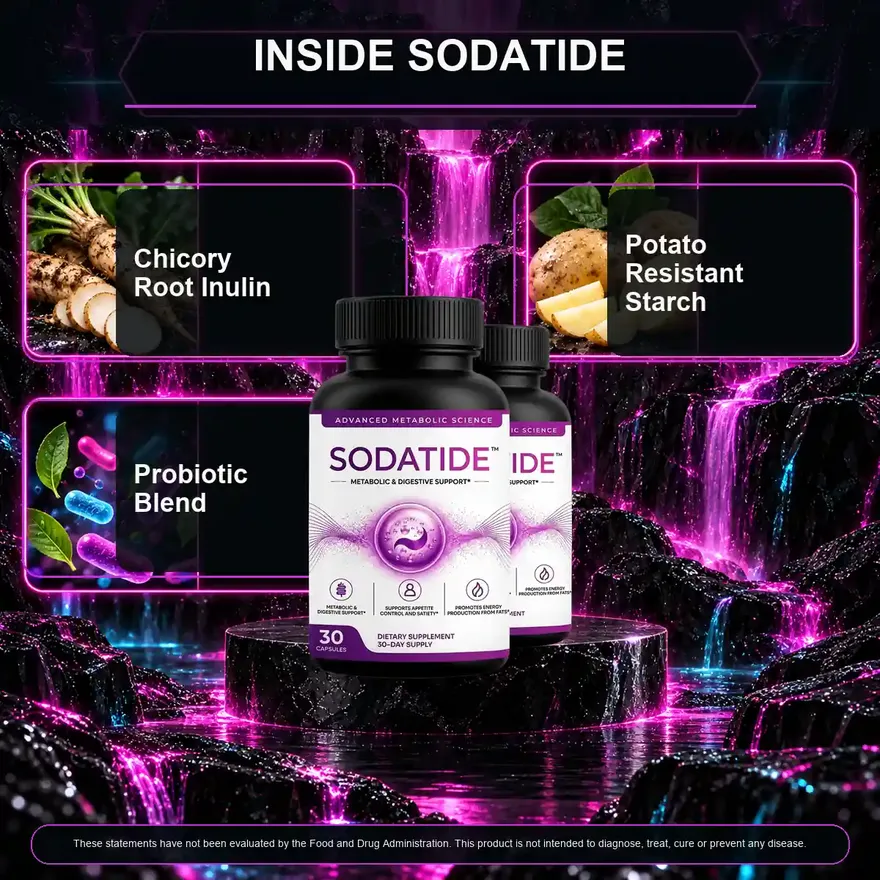
This product's Supplement Facts panel lists the ingredient as Potato Resistant Starch, with the line Potato [Resistant Starch] (tuber) and an amount of 100 mg per capsule. “Tuber” identifies the raw potato as the plant part used. Nothing on the label states a cook-and-cool processing step, which is the defining step for RS3. Read plainly, the label line describes a native, raw-potato-sourced resistant starch ingredient, consistent with the RS2 category, not a retrograded RS3 ingredient.
You can see this exact label line, alongside the full panel, on the supplement facts page.
Where each type stands with FDA's dietary fiber list
FDA maintains a specific list of isolated or synthetic non-digestible carbohydrates it recognizes as countable “dietary fiber” on a Nutrition or Supplement Facts label, separate from the question of whether something resists digestion at all. As of FDA's current guidance, high-amylose starch, described there as “resistant starch 2,” appears only on FDA's proposed list, meaning it is under consideration for formal recognition but not yet finalized; retrograded RS3 does not appear by name on either the recognized or proposed list at all (FDA, Questions and Answers on Dietary Fiber).
In practice, this means the specific resistant starch type named on this label sits in a regulatory middle ground: it resists digestion in the biochemical sense covered throughout this article, but it has not completed the separate, formal process FDA uses to decide what counts as “dietary fiber” for the Daily Value math on a label. That distinction is explored in more depth in a related article on this blog about this label's combined fiber total against the FDA Daily Value.
The practical takeaway for reading any resistant-starch label
Three questions turn a vague “contains resistant starch” claim into something you can actually evaluate:
- What plant source is named? Potato, corn, and banana are the common ones, and each has its own typical RS type.
- Is a processing step described? Cooking-and-cooling signals RS3. A raw tuber, seed, or grain source with no cooking step signals RS1 or RS2.
- Does the amount match a study dose, or just a study topic? The type being studied and the amount present on a label are two separate facts, and a label can be accurate about the first while saying nothing about the second.
On this label, the answers are: potato, no cooking step described, and 100 mg per capsule. That is enough to identify the type as RS2-consistent. What it does not tell you, on its own, is how that amount compares with the doses used in the research cited for RS2's effects, a separate question covered in the inulin vs. resistant starch comparison on this blog.
Knowing the type also sets expectations correctly before you read any resistant-starch research at all. A trial on RS2 from raw potato is not evidence about RS3 from cooked-and-cooled rice, and a cooking tip about chilling pasta says nothing about what a raw-potato-starch capsule ingredient will or will not do. Matching the type on the label to the type in the research is the single most useful habit for reading resistant-starch claims accurately.
Raw Potato Starch vs. Cooked-and-Cooled: common questions
Is all resistant starch the same thing?
No. Researchers classify resistant starch into five types (RS1 through RS5) based on the structural reason each one resists digestion, from physically trapped starch to chemically modified starch. They are not interchangeable.
What type of resistant starch does this label list?
The label names Potato [Resistant Starch] (tuber) at 100 mg per capsule, from the raw tuber with no cooking step described. That is consistent with RS2, native granular resistant starch, not the cooked-and-cooled RS3 type.
What is the difference between RS2 and RS3?
RS2 is raw, native starch that resists digestion because of its tight granular structure, as in a raw potato. RS3 forms only after starch is cooked (gelatinized) and then cooled, when some chains re-crystallize into a new resistant structure. The starting material and the processing are both different.
Does cooking and cooling a potato create the same resistant starch as this label lists?
No. Cooking and cooling creates RS3, a newly formed retrograded structure. This label names a raw-tuber ingredient with no described cooking step, which points to RS2, a different resistant-starch type formed a different way.
Is resistant starch recognized as dietary fiber by the FDA?
It depends on the type. High-amylose starch, described by FDA as “resistant starch 2,” is on FDA's proposed list for formal dietary fiber recognition, not yet finalized. RS3 does not appear by name on FDA's recognized or proposed lists.
Does the 100 mg on this label match the doses used in resistant starch research?
Published trials on potato-derived resistant starch have generally used multi-gram daily amounts, well above the 100 mg listed per capsule here. See the supplement facts page for the full panel and the inulin vs. resistant starch article for a side-by-side dose comparison.