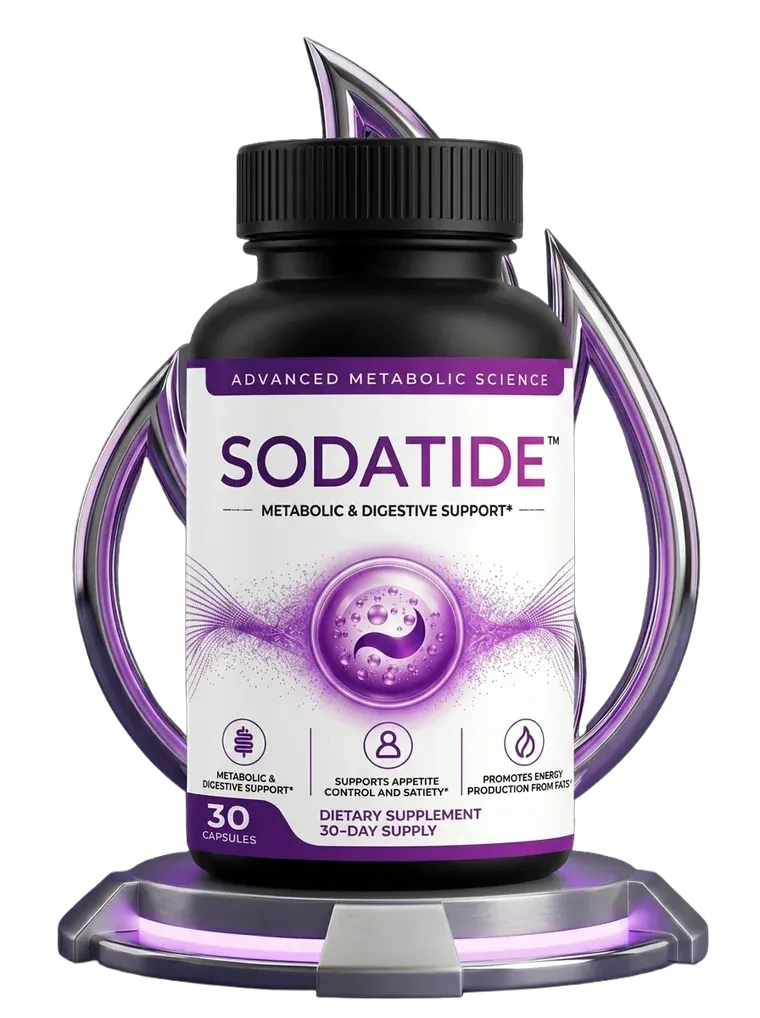
311mg of Fiber vs. the FDA's 28-Gram Daily Value: Doing the Math the Label Doesn't Show
This label lists two fibers separately: 211 mg of Chicory Root Inulin and 100 mg of Potato Resistant Starch, both marked with a dagger instead of a percent Daily Value. Added together, that is 311 mg of combined fiber per capsule. The FDA's established Daily Value for Total Dietary Fiber is 28 grams (28,000 mg). 311 mg divided by 28,000 mg works out to about 1.1% of that Daily Value, a figure that never appears on the label itself because the two ingredients are not declared as a combined “Dietary Fiber” line.
The two fiber lines on this label

This product's Supplement Facts panel lists three active ingredients. Two of them are fibers: Chicory Root Inulin at 211 mg, and Potato Resistant Starch at 100 mg. Each one appears on its own line, with its own name, its own amount, and a dagger symbol instead of a percent Daily Value. You can see this exact panel on the supplement facts page.
What the label does not do, at any point, is add those two numbers together and present them as a single “Total Dietary Fiber” figure. That is a real, specific gap between what a Supplement Facts panel technically shows and what a reader might assume it is communicating about fiber content overall.
Why no percent Daily Value appears next to either one
A percent Daily Value on a supplement label is calculated by dividing the amount of a nutrient in one serving by the established Daily Value for that nutrient, then expressing the result as a percentage. The calculation only appears when two conditions are both met: a Daily Value has to exist for that nutrient, and the label has to declare the ingredient under that nutrient's recognized name.
On this label, inulin and resistant starch are each declared under their own ingredient name, Chicory Root Inulin and Potato Resistant Starch, rather than under a combined “Dietary Fiber” line. A dagger symbol, explained directly on the panel, is the label's own way of marking that no percentage is being calculated for that line.
This is a labeling choice, not an unusual or improper one. Many supplement labels declare individual botanical or functional ingredients by their own common or usual name, especially when the formulator wants the specific source, chicory root, potato, named rather than folded into a generic nutrient category. The tradeoff is that a reader has to do the addition and the Daily Value lookup independently, since the panel itself stops at the individual milligram amounts.
It is worth noting, too, that a dagger is not a warning and does not imply the ingredient is somehow less real or less present than a nutrient with a printed percentage. It only means the label is not attempting a Daily Value calculation for that specific line, for one of the reasons covered in this article.
The FDA Daily Value for fiber: 28 grams
Total Dietary Fiber does have an established FDA Daily Value, unlike inulin or resistant starch individually. As of FDA's current Nutrition and Supplement Facts labeling reference, the Daily Value for Dietary Fiber is 28 grams, based on a 2,000-calorie daily reference diet.
That 28-gram figure is the number printed on virtually every cereal box, bread bag, and fiber supplement in the country whenever a “% Daily Value” appears next to a Dietary Fiber line. It is the fixed denominator for any fiber percent-DV calculation, including the one this label does not perform.
Doing the combined math: 311 mg against 28,000 mg
Converting both figures to the same unit makes the comparison straightforward. 28 grams equals 28,000 milligrams. This label's two fiber ingredients add up to 211 mg + 100 mg = 311 mg.
| Step | Figure |
|---|---|
| Chicory Root Inulin | 211 mg |
| Potato Resistant Starch | 100 mg |
| Combined fiber per capsule | 311 mg |
| FDA Daily Value for Total Dietary Fiber | 28,000 mg (28 g) |
| 311 mg ÷ 28,000 mg | ≈ 1.1% |
Worked out as a percentage, one capsule's combined fiber content is approximately 1.1% of the FDA Daily Value for Total Dietary Fiber. That is the figure a “% Daily Value” column would show, if this label calculated and printed one for a combined fiber line, which it does not.
Putting 1.1% in context
FDA's labeling rules use 5% of a Daily Value as the threshold for calling a nutrient amount “low” and 20% as the threshold for calling it “high,” language used elsewhere on Nutrition Facts labels for other nutrients. At roughly 1.1%, this capsule's combined fiber contribution sits well under even the “low” threshold most labels use for other nutrients, though that specific “low/high” claim language is written into regulation for Nutrition Facts food labels and is not a term this Supplement Facts panel uses or needs to use for an undeclared combined line.
None of that is a statement about whether 211 mg of inulin or 100 mg of resistant starch does anything at all; mechanism and dose-response are separate questions, covered in the two blog articles on this site that go through each fiber individually. It is strictly an arithmetic statement about where 311 mg sits on a 28,000 mg scale.
It is also worth separating this figure from the research doses discussed elsewhere on this blog. Clinical trials on inulin-type fructans have generally used total daily amounts in the range of 12 to 21 grams, and resistant starch trials have generally used several grams per day or more. Both of those ranges sit far above 28,000 mg's 1.1% share on their own, meaning the research dose comparison and the Daily Value comparison are two different yardsticks that happen to point in a similar direction here: a small amount, measured against either scale.
The deeper reason: both ingredients are still a proposed fiber, not a finalized one
There is a second, less visible reason a combined %DV would be complicated to print here even if a manufacturer wanted to, beyond the simple choice to list each ingredient by name. FDA maintains a specific list of isolated non-digestible carbohydrates it formally recognizes as countable “Dietary Fiber.” As of FDA's current guidance, inulin and inulin-type fructans remain in proposed status, intended for future rulemaking but not yet finalized, and high-amylose resistant starch (RS2), the type consistent with this label's potato-starch line, is likewise on FDA's proposed list rather than its finalized one (FDA, Questions and Answers on Dietary Fiber).
In plain terms: the two ingredients that make up this label's 311 mg are both fiber in the everyday, biochemical sense covered elsewhere on this blog, fructans and resistant starch that resist human digestion and reach the colon. But neither has completed the specific FDA process that would let a manufacturer declare a combined, finalized “Dietary Fiber” line with an official percent Daily Value next to it. That regulatory status, not just a formatting choice, is part of why this label's math stays implicit rather than printed.
How 311 mg compares to fiber amounts in ordinary food
Milligram and gram amounts are easy to lose a feel for in the abstract. A medium apple with the skin on carries roughly 4 to 5 grams of dietary fiber, about 13 to 16 times more than the 311 mg combined total in one capsule here. A half-cup serving of cooked lentils carries roughly 7 to 8 grams, over 20 times as much. A single tablespoon of ground chia seeds carries roughly 4 to 5 grams on its own, in the same range as the whole apple.
This comparison is not a judgment about the product; a capsule is not designed or marketed to replace food-based fiber intake, and this label does not claim that it does. A one- or two-capsule serving size is a fundamentally different delivery format than a meal, and the fiber ingredients here are present at amounts that reflect a capsule's physical volume limits rather than an attempt to match a food-level dose. It is simply a second, more intuitive way to sit with the same 1.1% figure calculated above.
For a reader specifically trying to reach the 28-gram daily target, these numbers suggest where the practical effort has to go: toward meals and whole foods, where a single serving can contribute double-digit percentages of the Daily Value, rather than toward a capsule whose two fiber ingredients, at the amounts printed here, contribute a small fraction of one percent each.
What this math does, and doesn't, tell you
What it tells you: on a strict milligram basis, 311 mg of combined fiber is a small fraction, about 1.1%, of the FDA's 28-gram Daily Value for Total Dietary Fiber, a figure you can verify yourself from the label's own printed amounts and FDA's published Daily Value.
What it does not tell you: whether that amount produces a noticeable physiological effect, whether the research behind inulin or resistant starch used doses anywhere near this one, or how the two fibers combine with the product's probiotic blend. Those are separate questions, covered in the inulin vs. resistant starch comparison and the mechanism articles on this fiber pair elsewhere on this blog. This article answers one question only: what does the label's own printed math actually work out to, once you do it.
That narrow scope is deliberate. A percent Daily Value, where one is printed, is a useful, standardized way to compare one product's nutrient content against another's on a common scale. The absence of one here does not mean the underlying amounts are hidden; they are printed in full, in milligrams, for both fiber ingredients. It means the specific percentage calculation has to be done by the reader, using the same two numbers, 311 mg and 28,000 mg, that this article has worked through.
That is also the most useful habit to carry to any other label with a dagger symbol next to an ingredient: find the amount, find whether an established Daily Value exists for that nutrient category, and do the division yourself. The arithmetic is never complicated. The amounts and the Daily Value are both public. What is missing is only the printed percentage, and now, for this specific label, it isn't missing anymore.
311mg of Fiber vs. the FDA's 28-Gram Daily Value: common questions
How much combined fiber is in one capsule of this product?
211 mg of Chicory Root Inulin plus 100 mg of Potato Resistant Starch, for a combined total of 311 mg per capsule, based on the amounts printed on the Supplement Facts panel.
What is the FDA Daily Value for dietary fiber?
28 grams (28,000 mg), based on a 2,000-calorie reference diet. It is the standard figure used to calculate a percent Daily Value for fiber on any U.S. food or supplement label.
What percent of the Daily Value does 311 mg represent?
About 1.1%. That is 311 mg divided by 28,000 mg, expressed as a percentage.
Why doesn't this label show that percentage directly?
The two fiber ingredients are declared separately, by their own ingredient names, rather than combined into a single “Dietary Fiber” line, so no combined percent Daily Value is calculated or printed.
Is there a regulatory reason the label avoids a combined fiber line, beyond formatting?
Possibly. Both named fibers, inulin-type fructans and high-amylose resistant starch, currently sit on FDA's proposed list for formal dietary fiber recognition rather than its finalized list, which affects how a manufacturer could declare them under an official combined Dietary Fiber line.
Does 1.1% of the Daily Value mean the product doesn't work?
Not necessarily, and this article doesn't make that claim. It answers a narrower question, what the label's own numbers add up to against the FDA's reference amount. Whether a given dose produces a noticeable effect is a separate question covered in other articles on this blog.